


The African Energy Chamber says the London-based event lacks meaningful African representation in leadership despite branding itself as a premier Africa-focused energy conference.
The African Energy Chamber (AEC), the voice of the African energy sector, has called for an industry-wide boycott of the upcoming Africa Energies Summit, citing concerns over local content, representation, and the exclusion of African professionals from leadership roles.
The summit, organized by Frontier Energy Network, is scheduled to take place in London from May 12 to May 14 and is marketed as “Africa’s Premier Global Upstream Conference.” However, critics argue that the event’s Africa-focused branding is not matched by meaningful representation of African professionals within the organizing company.
According to the AEC, Frontier Energy Network – led by Daniel Davidson – does not feature Black African professionals in its leadership structure, a situation the chamber says raises serious concerns about inclusion in discussions that directly affect the continent’s energy future.
The chamber argues that such a disconnect reinforces long-standing frustrations within Africa’s oil and gas industry, where local participation is often highlighted in rhetoric but not reflected in corporate practices.
For many African stakeholders, this issue touches on a broader challenge: ensuring that Africa’s vast natural resources are developed in ways that genuinely empower local talent and institutions.
Local Content Must Go Beyond Rhetoric
Industry advocates say local content cannot remain a talking point reserved for conference panels and policy papers.
Instead, they argue it must be reflected in hiring practices, leadership development, supplier participation, and access to opportunities across the energy value chain.
An Africa-focused business model that does not create space for African professionals, industry leaders warn, risks losing credibility in the very market it claims to serve.
“We will not accept being ‘Blacked-out’ of the oil and gas industry,” said NJ Ayuk, Executive Chairman of the African Energy Chamber.
“We want an industry that is welcoming and open, that is inclusive and supportive. People like Daniel Davidson take the opposite approach by refusing to hire Black Africans. They take it one step further by even banning people from entering the room.”
The chamber argues that African professionals and organizations have spent decades advocating for the development of the continent’s energy sector—pushing for better fiscal frameworks, improved licensing opportunities, supportive policy environments, and a just energy transition aligned with Africa’s development needs.
Yet, according to the AEC, examples like the Africa Energies Summit suggest that African expertise is still not being fully integrated into global discussions about the industry.
Positive Models of African Inclusion
While criticizing the summit’s organizers, the AEC also pointed to companies operating in Africa that demonstrate how local inclusion and operational success can coexist.
One example highlighted is Africa Fortesa Corporation, an independent oil and gas company operating in Senegal under the leadership of Rogers Beall.
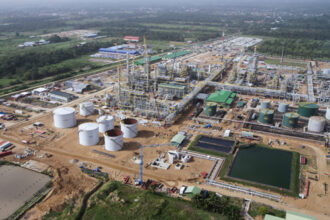
The company operates the Gadiaga onshore gas field in Senegal, which has been supplying domestic energy demand for nearly two decades.
Beyond its operational success, the chamber says the company stands out for its commitment to employing African professionals and prioritizing local workforce participation.
“We are inspired every day by people such as Rogers Beall,” Ayuk said.
“When you go to Senegal and see what he has done with Fortesa, you will be amazed. He has achieved this with majority African employees. Even during difficult circumstances such as COVID, the company stood with their employees.”
Ayuk also praised companies that maintained their investments during challenging periods in African energy markets, including those that continued supporting Mozambique’s LNG projects despite security and economic challenges.
“We are passionate about companies that invest in local talent, create policies that support capacity building, and ensure African professionals are not just part of—but leading—Africa’s energy discussions,” he added.
The Future of Africa’s Energy Workforce
The debate comes at a time when Africa’s oil and gas sector is experiencing renewed attention globally.
With new discoveries in countries such as Namibia, Senegal, Mozambique, and Guyana’s neighboring Atlantic basin, the continent has emerged as a critical frontier for future hydrocarbon supply.
At the same time, Africa’s workforce is becoming increasingly skilled, with thousands of students graduating each year in fields such as petroleum engineering, geoscience, environmental science, and energy economics.
Industry leaders say these graduates should have fair access to opportunities in the global energy sector.
African professionals, they argue, should be evaluated based on their skills, training, and capacity to contribute, rather than facing barriers linked to race or geography.
Reputation Risks for the Oil and Gas Sector
The AEC also warned that exclusionary practices could damage the reputation of the oil and gas industry at a time when it already faces significant global scrutiny.
Environmental campaigners and anti-fossil fuel activists frequently criticize the sector for its impact on climate change and its relationship with developing economies.
According to Ayuk, practices that appear to marginalize Africans could reinforce negative narratives about the industry’s commitment to local communities.
“When Frontier, Daniel Davidson and Africa Energies Summit engage in these discriminatory behaviours, do you know what that says?” Ayuk said.
“It feeds into the same narrative as Greta Thunberg and those anti-fossil fuel activists who say the industry doesn’t care about Black people or African communities. Daniel Davidson and Frontier justify that narrative.”
A Call for Industry Reflection
For the African Energy Chamber, the controversy surrounding the summit highlights a broader issue about who gets to shape the narrative around Africa’s energy future.
The chamber says the continent’s oil and gas industry must be built not only in Africa but with Africans at its center—from boardrooms and conference platforms to engineering teams and supply chains.
As the global energy transition accelerates and competition for investment intensifies, African leaders argue that genuine inclusion will be critical to building a sustainable and credible industry.
For now, the chamber’s message to industry stakeholders is clear: boycott the Africa Energies Summit until representation and local participation concerns are addressed.