


What brands can learn from Johnnie Walker on how ultra-scarcity, cultural symbolism and heritage storytelling are shaping the future of luxury brand management in emerging markets
By Martin Ogumah
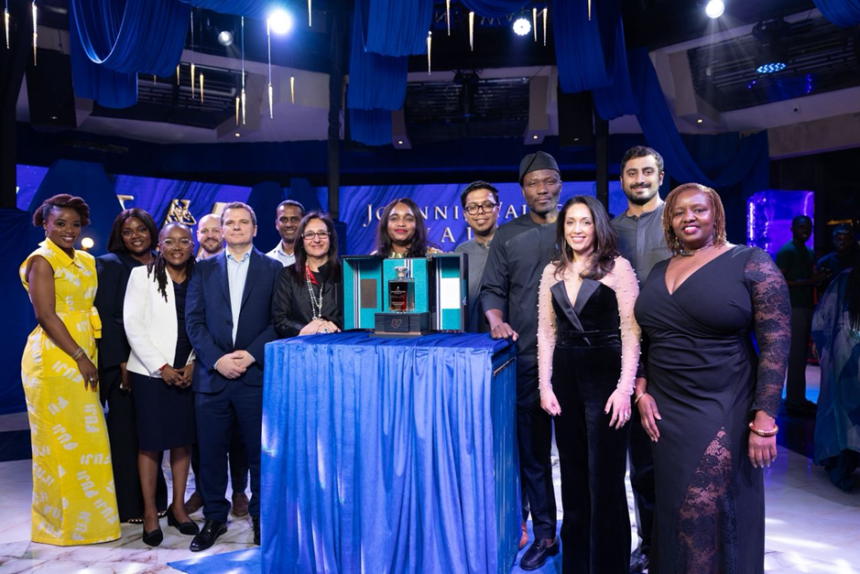
In the world of luxury branding, exclusivity is currency, heritage is authority, and storytelling is power. Johnnie Walker’s unveiling of an ultra-exclusive blended Scotch whisky collection in Lagos, to mark Nigeria’s 65th Independence Anniversary, is a masterclass in how global luxury brands localise prestige without diluting their core identity.
Held recently in Lagos, the unveiling marked a historic first: a luxury release of this magnitude created specifically in honour of Nigeria. More than a product launch, the event positioned Johnnie Walker at the intersection of cultural respect, heritage marketing, and ultra-premium brand strategy – an increasingly important space as luxury brands court high-net-worth consumers in Africa’s fastest-growing markets.
Scarcity as Strategy: When Less Truly Means More
The collection consists of only 10 bottles world-wide; each designed as a one-of-one collector’s piece. In luxury brand management, scarcity is not accidental; it is deliberate brand architecture. By limiting the release so dramatically, Johnnie Walker reinforces perceived value, desirability, and symbolic ownership – key drivers of luxury consumption.
The collection was created by Master Blender Dr Emma Walker under the newly introduced Johnnie Walker Vault, a luxury platform dedicated to blending artistry. The Vault, located beneath the Johnnie Walker Experience in Edinburgh, houses a rotating selection of 500 rare, aged, and ghost casks, curated from over 10 million casks of Scotch whisky available to the brand.
From this archive, Dr Walker selected ghost stocks from six historic distilleries – Brora, Glenury Royal, Convalmore, Caledonian, Carsebridge, and Port Dundas – all of which were part of Johnnie Walker’s inventory in 1960, the same year Nigeria gained independence. The alignment of brand heritage with national history exemplifies how luxury brands use temporal symbolism to deepen emotional resonance.
Heritage Storytelling as Brand Capital

“Crafting this blend has been a deeply personal journey for me, a tribute to history and a celebration of a nation’s spirit,” said Dr Emma Walker. “I brought together the most precious liquids from just six of our revered ghost distilleries, each holding a liquid memory from our operations around 1960, the year Nigeria claimed its independence. This exceptional liquid is a shared journey, a testament to the progressive spirit that connects Johnnie Walker with Nigeria.”
In luxury branding, heritage is not nostalgia – it is legitimacy. By tying ghost distilleries (now silent forever, except Brora) to Nigeria’s independence narrative, Johnnie Walker transforms whisky into a cultural artefact. The result is a product that cannot be replicated, not just because of its ingredients, but because of its story.
Product as Experience, Not Just Consumption
The whisky itself is positioned as a sensory narrative. On the nose, it delivers richness and depth with aromas of salt and toasted spices, softened by raisins and apricots. The palate unfolds with moist raisins and madeira sugar syrup, finishing with a gentle whiff of Highland smoke. For luxury brands, sensorial storytelling is critical – it allows consumers to “experience” value beyond price.
“This is more than just a whisky; it’s a testament to the power of a shared vision,” said a Johnnie Walker Brand Representative. “We are thrilled to honour Nigeria’s incredible journey with a blend that is as rare and dynamic as the nation itself. By unlocking the Johnnie Walker Vault for Nigeria, we are not only offering an unparalleled product but also celebrating a progressive spirit that resonates with our core value of ‘Keep Walking.’”
Design, Culture and the Power of Local Luxury Codes
Luxury branding today demands cultural intelligence. Each of the 10 bottles is uniquely wrapped in Aso-Oke fabric, ensuring that every owner holds a singular piece of Nigerian heritage. This integration of indigenous design elevates the product from imported luxury to culturally embedded prestige – a critical move for brands seeking authenticity in local markets.
The bottles are available strictly by invitation, reinforcing exclusivity while transforming access itself into a status symbol. In luxury marketing, access is often more powerful than ownership.
What Brands Can Learn
Johnnie Walker’s Nigeria Independence release illustrates the evolving playbook of luxury brand marketing: Ultra-scarcity drives desirability. Cultural alignment builds emotional legitimacy. Heritage storytelling reinforces authority. Experiential value transcends product utility. Local symbolism enhances global prestige.
As luxury brands increasingly turn their attention to Africa, Johnnie Walker’s approach demonstrates that success lies not in scale, but in meaning. By honouring Nigeria with intentional design, historical symmetry, and narrative depth, the brand doesn’t just sell whisky – it curates legacy.
For BrandiQ readers, this launch is a compelling reminder that in luxury branding, the most powerful products are those that walk slowly, deliberately, and with purpose.