


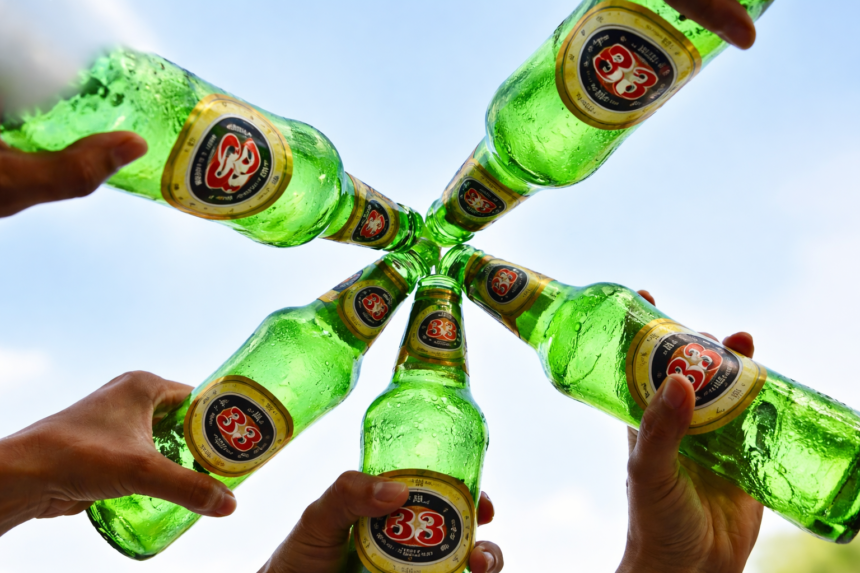
In Nigeria’s increasingly competitive beer market, where consumer loyalty is shaped as much by emotion as by taste, brands are turning to experience rather than advertising to secure relevance. The relaunch of 33 Export Lager Beer in Benin City is a case in point – an attempt not merely to reintroduce a product, but to reassert a cultural presence.
The event, themed the “33 Connect Party”, is scheduled to hold at Victor Uwaifo Hall, Benin City, and signals a broader shift in alcohol marketing strategy in Nigeria: from product-centred communication to community-driven experiential branding.
At the centre of the relaunch is a redesigned bottle and a repositioned brand promise – “Taste That Unites” – a phrase that increasingly reflects how FMCG companies are responding to fragmented urban social life. In markets such as Benin City, where nightlife functions as both social infrastructure and informal economy, beer brands are no longer passive players; they are architects of social interaction.
The relaunch builds on a previous activation in Uyo and reflects a growing pattern in Nigerian experiential marketing: the use of regional city circuits rather than one-off national campaigns.
A new model of social marketing
Rather than relying solely on traditional advertising, 33 Export is investing in immersive brand ecosystems, including music, shared consumption spaces, and symbolic rituals of unity.
Key features of the Benin activation include:
- A live performance by Nigerian artiste Terry G, reinforcing music-driven brand recall
- The introduction of a “33 Connect Friendship Table”, a communal drinking format designed to simulate collective identity
- A curated nightlife experience designed to merge entertainment with product visibility
The symbolic centrepiece of the campaign – the friendship table – illustrates a broader marketing logic: the transformation of consumption into ritual.
The economics of belonging
Nigeria’s beer industry is increasingly shaped by competition not only in pricing and distribution, but in emotional positioning. In this context, 33 Export’s strategy reflects a deeper understanding of urban social dynamics: that loyalty is built through shared experience rather than product differentiation alone.
The Benin relaunch therefore functions as both marketing activation and social theatre – where the product becomes secondary to the experience it enables.
BrandiQ takeaway
For communication strategists, the campaign underscores three structural shifts:
- Brand equity is now increasingly built through experiential ecosystems, not media reach alone
- Consumption spaces are becoming identity platforms
- Nigerian FMCG competition is evolving into a culture-led engagement economy