

Guinea-Conakry aims to attract new oil, gas and power investments as Energy Minister Aboubacar Camara prepares to present the country’s strategy at the upcoming Invest in African Energy Forum in Paris.
Aboubacar Camara, Minister responsible for Health, Sanitation, Energy, Hydraulics and Hydrocarbons in Guinea, will deliver a keynote address at the upcoming Invest in African Energy Forum 2026 in Paris.
The event will provide Guinea with an opportunity to showcase its plans to expand oil and gas exploration while accelerating investments in large-scale power infrastructure.
The forum comes as exploration activity increases across the MSGBC Basin, which includes Mauritania, Senegal, Gambia, Guinea-Bissau and Guinea.
Recent discoveries in neighbouring countries have significantly increased global interest in the region’s offshore petroleum potential.
Opening Guinea’s Frontier Hydrocarbon Sector
Compared with other countries in the MSGBC basin, Guinea’s hydrocarbon sector remains largely underexplored.
To stimulate exploration activity, the government has been preparing a licensing round covering 22 onshore and offshore blocks aimed at attracting international energy companies.
Authorities have been finalizing the technical and fiscal framework for the bid round while improving access to geological data.
A National Seismic Data Visualization Center, developed in partnership with SLB and TGS, will provide potential investors with enhanced access to subsurface data ahead of the planned licensing process.
The initiative is designed to increase transparency and provide companies with better insight into Guinea’s offshore basins.
Expanding Power Infrastructure to Support Economic Growth
Alongside upstream oil and gas ambitions, Guinea is also pursuing a major expansion of its electricity generation capacity.
Hydropower remains the backbone of the country’s energy system.
Two major projects along the Konkouré River have significantly increased national generation capacity in recent years.
The 450-megawatt Souapiti Hydropower Plant and the earlier 240-megawatt Kaleta Hydropower Facility have improved grid reliability while supporting power supply for mining operations and urban centers.
Several additional projects are currently under development.
These include:
- the 300 MW Amaria Hydropower Project
- the 294 MW Koukoutamba Hydropower Plant
The Koukoutamba project is being developed through the Senegal River Basin Development Authority and will supply electricity across multiple West African countries.
Diversifying the Energy Mix
Beyond hydropower, Guinea is exploring new opportunities to diversify its energy mix.
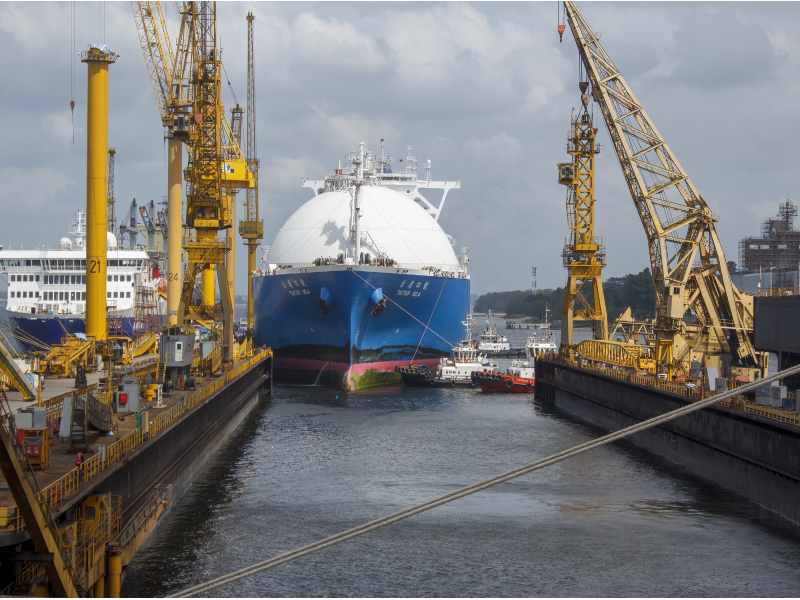
One proposal under consideration involves the construction of an LNG terminal at the Port of Kamsar, which could support both import and export operations while supplying a gas-fired power plant capable of generating up to 1,900 megawatts of electricity.
Solar power is also expected to play a growing role in the country’s long-term energy strategy.
Government plans call for the development of up to 500 megawatts of solar generation capacity in the coming years, creating new opportunities for independent power producers and infrastructure investors.
Strengthening Regional Energy Integration
Guinea is also expanding its role in regional power networks.
A major Guinea–Mali electricity interconnection project, approved for financing in 2025, aims to improve electricity supply in eastern Guinea while enabling cross-border electricity trade.
The project forms part of broader efforts to strengthen integration within the West African Power Pool, improving energy security and grid stability across the region.
Platform for Investment Dialogue
The Invest in African Energy Forum 2026, scheduled for April 22–23 in Paris, will bring together global investors, project developers, policymakers and industry leaders.
The event serves as a key platform for deal-making ahead of African Energy Week, offering two days of discussions focused on energy investment opportunities across the continent.
For Guinea, the forum provides a chance to present its evolving energy strategy to the global investment community and attract the partnerships needed to accelerate the next phase of development in its oil, gas and power sectors.