

Africa’s small and medium-sized enterprises (SMEs) are facing mounting cost pressures as global crude oil volatility continues to disrupt fuel markets, pushing diesel-dependent economies toward a critical inflection point.
The ongoing Gulf crisis has triggered sharp fluctuations in Brent crude prices, rising from $81 per barrel on March 3 to $112 on March 12, before easing to $98 on March 25, 2026. For African economies heavily reliant on diesel-powered electricity, these swings are translating into rising operational costs, supply instability, and shrinking business margins—particularly for SMEs.
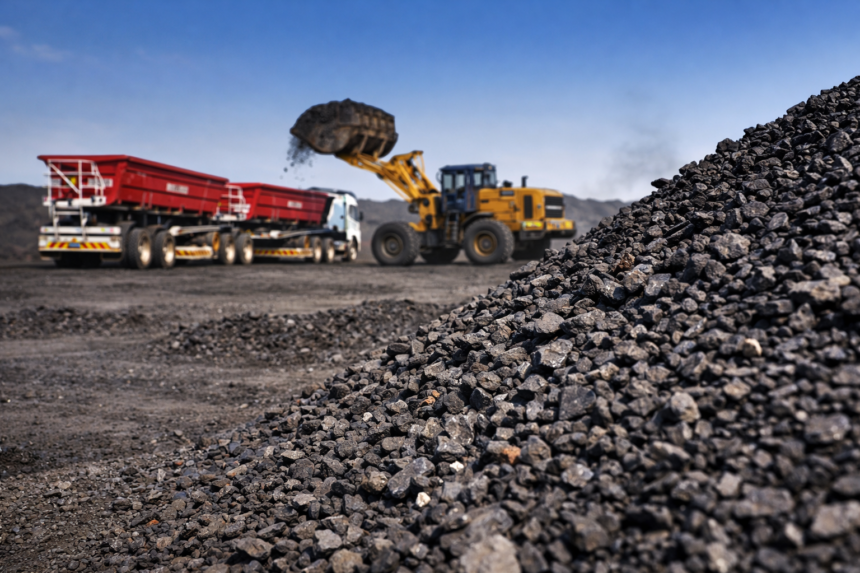
In this context, coal-fired power generation is re-entering the policy and investment conversation as a domestic, financeable and stabilising energy alternative.
Countries such as Nigeria, Zimbabwe, Botswana and Uganda possess substantial coal reserves, offering an opportunity to reduce reliance on imported fuels while establishing more predictable and cost-efficient power systems.
Escalating Fuel Costs Deepen SME Vulnerability
Diesel remains the default power source for many African SMEs due to unreliable grid infrastructure. However, recent price surges have intensified financial strain.
In Nigeria, fuel prices have climbed to over ₦1,000 per litre in March 2026, representing a 39.5% increase since February, making it one of the highest increases globally. In Zimbabwe, diesel prices have surged to $2.18 per litre, while petrol exceeds $2 per litre – the highest across the Southern African Development Community (SADC). Similar volatility persists in Uganda and Botswana.
Compounding the challenge are supply disruptions linked to geopolitical tensions around the Strait of Hormuz, further constraining access to imported fuels.
Even in South Africa, Africa’s largest economy, persistent loadshedding and grid limitations have pushed businesses toward diesel alternatives, amplifying exposure to global fuel shocks.
Coal as a Strategic Alternative for Business Continuity
Africa’s coal reserves – estimated in the hundreds of billions of tons – present a viable pathway to energy cost stabilisation. Nigeria alone holds approximately 9.8 billion cubic meters (bcm) of coal reserves, while Zimbabwe has 502 million cubic meters (mcm), Botswana 1.6 bcm, and Uganda 800 mcm.
For SMEs, access to affordable and reliable electricity is critical to survival and growth. Coal-fired power generation offers a lower-cost, domestically controlled alternative capable of supporting manufacturing, trade, and service industries.
Beyond cost savings, coal-based systems enable more predictable long-term planning, improved business resilience, and reduced exposure to foreign exchange volatility.
According to NJ Ayuk, Executive Chairman of the African Energy Chamber:
“When African businesses are being crushed by imported fuel costs, using domestic coal to keep factories running and SMEs alive is not a step backward—it is a rational act of economic self-defense.”
AEW 2026 Reframes the Coal Debate
The role of coal in Africa’s future energy mix will be revisited at African Energy Week 2026, taking place in Cape Town from October 12–16.
The event will move beyond ideological debates to examine practical applications of coal, including:
- Clean coal technologies
- Efficiency improvements
- Hybrid energy systems
- Financing models for scalable deployment
As energy security, industrialisation, and affordability return to the forefront of policymaking, AEW 2026 is expected to drive pragmatic dialogue on how coal can support productive sectors that cannot rely on intermittent or high-cost power sources.