

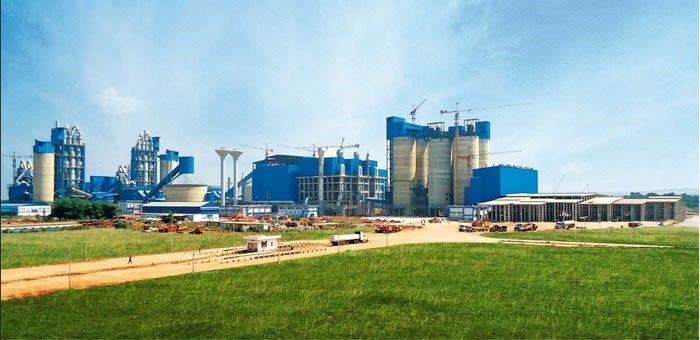
Africa’s largest indigenous conglomerate is betting that scale, capital and regional integration will define the next phase of its growth.
The Dangote Group has unveiled an ambitious plan to more than triple its turnover to US$100 billion by 2030, a target that underscores both the optimism and capital intensity of Africa’s industrialisation agenda. The strategy is being backed by the African Export-Import Bank, which has reaffirmed its support for the group’s expansion programme.
At the centre of the plan is a two-phase growth roadmap spanning 2025–2028 and 2028–2030, designed to reposition Dangote Group as a diversified industrial powerhouse with continental reach.
A capital-intensive industrial strategy
To achieve its target, the conglomerate estimates it will require at least $40 billion in new investments over the next five years. The scale of capital reflects the group’s transition from national champion to pan-African infrastructure and industrial platform.
Key expansion priorities include:
- Doubling capacity at the Dangote Petroleum Refinery from 650,000 barrels per day to 1.4 million barrels per day
- Expanding fertiliser output from 3 million to 12 million tonnes annually, positioning it among the world’s largest urea producers
- Scaling cement, rice, and broader food production across African markets
- Entering new sectors including ports, pipelines, gas infrastructure, mining, data centres and power generation
The inclusion of digital infrastructure, particularly data centres, signals a shift beyond traditional heavy industry into the foundations of Africa’s emerging digital economy.
Development finance as industrial catalyst
The partnership with Afreximbank reflects a broader shift in African development finance, where regional institutions are increasingly playing the role of industrial accelerators rather than traditional lenders.
The collaboration was formalised during a presentation titled “Vision 2030: Supercharging Dangote Group for Long Term Success”, presented to Afreximbank’s board in late March 2026.
A $2.5 billion facility, underwritten by Afreximbank as part of a broader $4 billion syndicated loan, has already been structured to support the Dangote Petroleum Refinery and Petrochemicals complex.
The politics of industrial sovereignty
For Aliko Dangote, the partnership represents more than financing. He framed Afreximbank as a long-term strategic partner in Africa’s push for industrial sovereignty: The emphasis, he noted, is on reducing import dependence and building African-led capacity in energy, manufacturing and infrastructure. On the institutional side, Afreximbank leadership has positioned the partnership as part of a broader response to global fragmentation and supply chain insecurity.
The bank argues that Africa’s vulnerability during the COVID-19 pandemic exposed structural weaknesses in local production systems – particularly in pharmaceuticals and medical supplies.
Structural ambition, structural risk
While the scale of ambition is notable, the model raises familiar constraints: infrastructure gaps, currency volatility, energy reliability and political risk across multiple jurisdictions.
Yet the underlying thesis remains unchanged: Africa’s growth will increasingly depend on large-scale, vertically integrated industrial champions capable of operating across borders.
BrandiQ takeaway
- African industrialisation is shifting towards mega-project, mega-capital models
- Development finance institutions are becoming strategic industrial partners, not just lenders
- Conglomerates like Dangote are evolving into infrastructure ecosystems, not single-sector firms
ring investor confidence.
Reform versus risk
At the operational level, the reform is already underway. Some settlement agreements totalling N2.3 trillion have been signed, with partial funding already disbursed.
However, the World Bank warns that while the policy may stabilise the sector in the short term, it risks shifting the burden rather than resolving it. In effect, Nigeria is exchanging sectoral liquidity stress for sovereign fiscal stress.
Structural contradiction in power reform
The electricity sector illustrates a recurring policy dilemma in Nigeria: reforms designed to fix operational inefficiencies often rely on fiscal interventions that deepen sovereign exposure.
The challenge is not only financial, but structural:
- weak tariff recovery
- transmission losses
- gas supply constraints
- governance fragmentation
BrandiQ takeaway
- Power sector reform is increasingly a fiscal policy issue, not just infrastructure policy
- Nigeria’s electricity crisis is evolving into a sovereign balance-sheet problem
- Debt securitisation solves liquidity gaps but may expand long-term fiscal vulnerability