

By BrandiQ Analyst
Nigeria’s 2026 fiscal plan is revealing a familiar pattern in public finance: what begins as a budget of restraint often ends as a vehicle for expansion. The latest revisions to the federal budget suggest that infrastructure—particularly rail and transport corridors—has once again emerged as the government’s preferred instrument for signalling economic ambition.
Fresh findings indicate that the Federal Government has inserted approximately ₦487.56bn worth of new rail and highway projects into the approved 2026 budget. These additions, which were absent from the original proposal submitted in 2025, point to a more assertive and politically consequential infrastructure strategy than initially disclosed.
The development, first reported as a scoop, underscores the fluidity of Nigeria’s budgeting process – and raises important questions about fiscal transparency, execution capacity, and the economic logic underpinning large-scale capital expansion.
A Budget That Grew in the Shadows
When the 2026 budget was first presented in December 2025, it was framed as a “Budget of Consolidation, Renewed Resilience and Shared Prosperity,” with a total size of ₦58.18tn. At the time, the emphasis appeared to be on stabilisation – managing inflation, sustaining reforms, and addressing legacy obligations.
Yet the version eventually passed by the National Assembly tells a different story.
Nine major infrastructure projects. largely focused on light rail systems and strategic transport corridors, were introduced after the initial submission. Their appearance in the final appropriation documents suggests a post-submission recalibration, one that significantly tilts the budget towards capital-intensive development.
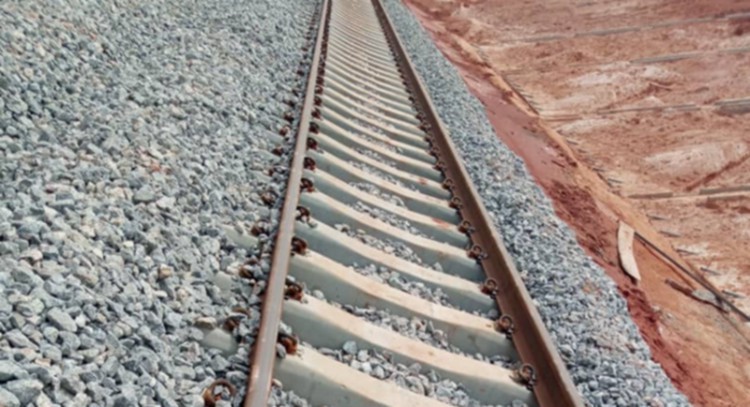
At the centre of this expansion is the Lagos Green Line project, which alone accounts for ₦170bn in counterpart funding under the government’s Renewed Hope Infrastructure Programme. Other major allocations include ₦125bn for the Kaduna Light Rail, ₦120bn for Kano Light Rail, and ₦50bn for a similar project in Ogun State.
In addition to the full-scale projects, the government earmarked N4bn each for feasibility studies for light rail systems in Enugu and Maiduguri, while N5.6bn was set aside for a nationwide narrow gauge rail assessment.
Further provisions include N8.96bn for feasibility studies covering the Calabar–Maiduguri corridor and the proposed Maiduguri–Sokoto superhighway, underscoring a broader ambition to connect Nigeria’s southern and northern economic belts.
Together, these projects signal a deliberate attempt to deepen urban mass transit systems in Nigeria’s most economically active corridors.
Rail Revival or Fiscal Stretch?
The renewed focus on rail infrastructure reflects a broader policy ambition: to reduce congestion, improve productivity, and reposition cities as engines of growth.
But beneath the ambition lies a more complex economic calculus.
Rail projects are capital intensive, long gestation investments. Their returns, both economic and social, are typically realised over decades, not budget cycles. In a fiscal environment already strained by debt servicing and revenue volatility, such commitments raise questions about sustainability.
The inclusion of feasibility studies for additional corridors – including the Calabar – Maiduguri route and the proposed Maiduguri-Sokoto superhighway – suggests that the current projects may only be the beginning of a much larger pipeline.
This forward planning has strategic merit. It signals intent, prepares the ground for future investment, and aligns with long-term development goals. Yet it also risks creating a pipeline of expectations that may outpace fiscal reality.
The Politics of Infrastructure
Infrastructure spending in Nigeria has always been more than an economic decision; it is also a political one. A political critic and analyst, who prefers to remain anonymous pointed out a situation where Lagos and Ogun state receive a combined allocation of
The geographic spread of the new projects – Lagos in the south-west, Kaduna and Kano in the north-west, Ogun in the south-west, and feasibility studies extending to the south-east, south-south and north-east – reflects an attempt at regional balancing.
Such distribution is not accidental. It serves to:
- Signal inclusivity
- Address regional development disparities
- Build political goodwill across constituencies
In this sense, the budget functions not just as an economic document, but as a map of political priorities.
Beyond Rail: A Broader Fiscal Expansion
The infrastructure insertions are part of a wider pattern of budgetary expansion.
The revised 2026 budget includes:
- ₦3.5tn allocated to settle legacy obligations from 2025
- ₦482.76bn earmarked for a Nigeria–United States health intervention framework
- Increased capital allocations across key ministries
The Federal Ministry of Works, for instance, saw its capital allocation rise to ₦3.17tn, reinforcing its central role in executing the government’s infrastructure agenda.
Other sectors also received substantial funding:
- Agriculture: ₦3.26tn
- Innovation, Science and Technology: ₦1.83tn
- Health: ₦1.23tn
This spread suggests a multi-sectoral approach to development, with infrastructure serving as the backbone.
Execution: The Persistent Constraint
Nigeria’s challenge has rarely been in planning or allocation. It has been in execution.
Historically, capital budgets have suffered from:
- Delayed releases
- Cost overruns
- Project abandonment
- Weak coordination across agencies
The addition of nearly ₦500bn in new projects intensifies these risks.
Without corresponding improvements in project management, procurement efficiency, and institutional capacity, there is a danger that these allocations may translate into partial completions rather than transformative outcomes.
Debt, Deficits and Trade-offs
The fiscal implications of the expanded budget cannot be ignored.
Nigeria’s public finances are already under pressure from:
- Rising debt servicing costs
- Limited revenue mobilisation
- Currency volatility
By introducing new capital commitments while also servicing legacy debts, the government is effectively front-loading its fiscal obligations.
This creates a delicate balancing act:
- Invest in infrastructure to drive growth
- Maintain fiscal discipline to preserve stability
The risk is that without significant revenue expansion, the burden of these investments may fall disproportionately on future budgets.
Infrastructure as Economic Strategy
Despite these concerns, the strategic logic behind the infrastructure push is clear.
Efficient transport systems can:
- Reduce logistics costs
- Improve urban productivity
- Enhance regional integration
- Attract private investment
In a country where infrastructure deficits have long constrained growth, such investments are not optional – they are necessary.
The question is not whether Nigeria should invest in infrastructure, but how it does so, and at what pace.
BrandiQ Analysis: What This Means for Policy and Markets
From a strategic standpoint, the 2026 budget revision reveals three key insights:
1. Infrastructure is the Core Narrative of Economic Policy
The government is positioning transport and logistics as the foundation of its growth strategy.
2. Budgeting is Increasingly Iterative
The insertion of projects post-submission suggests a dynamic, but less transparent, budgeting process.
3. Execution Will Define Success
Allocations alone do not drive growth. Delivery does.
The Deeper Question
At its core, the expansion of Nigeria’s 2026 budget raises a fundamental question:
Can a country with constrained fiscal space afford to accelerate infrastructure investment at this scale – and can it afford not to?
This is the paradox of development economics in emerging markets.
To grow, Nigeria must invest.
To remain stable, it must restrain spending.
Navigating this tension will define not just the success of the 2026 budget, but the trajectory of the country’s economic future.
Closing Reflection
The quiet insertion of ₦487bn in rail and highway projects may appear as a technical adjustment within a sprawling budget document. In reality, it is a signal – of ambition, of political intent, and of the enduring belief that infrastructure remains Nigeria’s most visible pathway to development.
Whether that belief translates into tangible outcomes will depend less on what is written in the budget, and more on what is built on the ground.