
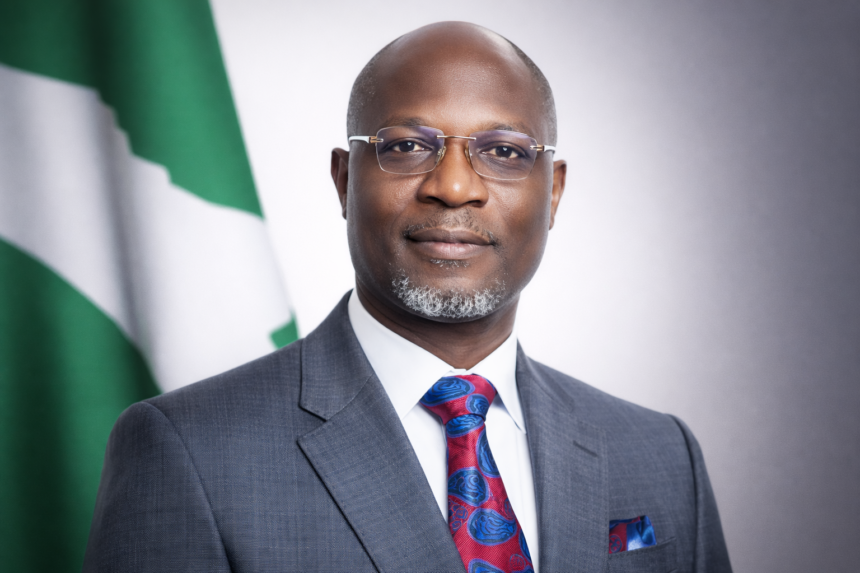
Nigeria’s capital market is gaining stronger global visibility following the re-election of Emomotimi Agama, Director-General of the Securities and Exchange Commission Nigeria, as Vice Chair of the Africa/Middle East Regional Committee of the International Organization of Securities Commissions.
The renewed mandate, which spans 2026 to 2028, reinforces Nigeria’s strategic position within the global regulatory architecture that shapes capital markets worldwide.
Why This Role Matters
Agama’s re-election ensures Nigeria retains its seat on the IOSCO Board – the organisation’s highest decision-making body – where global standards for securities regulation are developed and coordinated.
For Africa’s largest economy, this is more than a ceremonial role. It is a policy lever, enabling Nigeria to:
- Influence global regulatory frameworks
- Align domestic markets with international best practices
- Strengthen investor confidence in its financial system
From Representation to Influence
According to the Commission, the significance of this position goes beyond symbolic representation.
“Beyond representation, this development enhances Nigeria’s ability to contribute meaningfully to global regulatory dialogue, particularly in areas such as enforcement cooperation, market integrity, and investor protection.
It creates a stronger platform for collaboration with other jurisdictions on cross-border regulatory issues, including tackling illicit financial flows and strengthening supervisory frameworks.”
This positioning is particularly relevant at a time when cross-border capital flows, digital assets, and financial market complexity are redefining global regulation.
Nigeria in the Global Regulatory System
Established in 1983, IOSCO oversees regulators responsible for more than 95 per cent of the world’s securities markets, making it one of the most influential bodies in global finance.
Agama’s continued presence at this level signals:
- A vote of confidence in Nigeria’s regulatory reforms
- Growing recognition of the country’s market governance standards
- Increased opportunity for Nigeria to shape emerging financial rules
Strategic Implications for Nigeria
The SEC emphasised that this milestone will:
- Deepen collaboration on cross-border regulatory challenges
- Strengthen frameworks against illicit financial flows
- Enhance market transparency and resilience
“Ultimately, this milestone reinforces Nigeria’s position as a leading voice in regional and global capital market development. It is expected to contribute to building a more resilient, transparent, and robust capital market ecosystem.”
BrandiQ Insight
Agama’s re-election reflects a broader shift:
Africa is no longer just adapting to global financial rules – it is increasingly participating in shaping them.
For Nigeria, sustained representation at IOSCO offers a pathway to:
- Attract more institutional capital
- Improve market credibility
- Integrate more deeply into global financial systems
The Bottom Line
As global markets evolve, regulatory influence is becoming as critical as capital itself.
With Emomotimi Agama retaining a key leadership role within IOSCO, Nigeria is positioning itself not just as a participant – but as a shaper of the rules governing global finance.