

Africa’s offshore LNG developments could provide rapid export capacity as Europe seeks to diversify gas supplies.
Africa’s expanding floating liquefied natural gas (FLNG) sector is emerging as a potential solution to Europe’s tightening gas supply situation, offering rapid export capacity and new investment opportunities.
The topic is expected to feature prominently at the Invest in African Energy (IAE) Forum, scheduled to take place in Paris next month.
European energy markets have faced renewed pressure following disruptions in the Strait of Hormuz and ongoing efforts by the European Union to reduce dependence on Russian gas. These developments have exposed vulnerabilities in global LNG supply chains and pushed up spot prices.
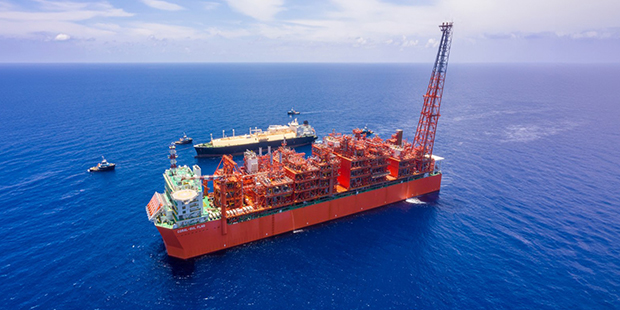
FLNG technology provides a faster and more flexible alternative to traditional onshore LNG plants. By placing liquefaction facilities on offshore vessels, developers can bypass large land-based infrastructure and significantly reduce project timelines and capital costs.
Africa’s offshore gas reserves, many of which remain underdeveloped, are well suited to this technology.
One prominent example is the Congo LNG project, operated by Italian energy company Eni. The project deployed the Tango FLNG unit in 2023, followed by the Nguya FLNG unit in 2025, increasing the project’s total capacity to approximately three million tonnes per year, or about 4.5 billion cubic metres of gas annually.
Exports from the Nguya facility began in early 2026, highlighting the speed and flexibility of floating LNG systems.
The Republic of Congo’s Minister of Hydrocarbons, Bruno Jean-Richard Itoua, is expected to discuss the country’s LNG expansion plans during the IAE 2026 forum.
Elsewhere, Mozambique’s Coral South FLNG project has already shipped more than 100 LNG cargoes to Europe since 2022. Its follow-up project, Coral North, is expected to significantly expand offshore LNG capacity in the coming years.
In addition to faster deployment, FLNG infrastructure offers several operational advantages, including reduced onshore footprint, lower permitting risk and phased capacity expansion aligned with gas field development.
As Europe seeks to diversify its energy imports amid geopolitical uncertainty, Africa’s LNG resources are increasingly viewed as both a strategic supply option and a major investment frontier.