

The situation: This is real. About 15 years ago, a PR company, here identified as ABC Communications, was consulting for Client A on a brand launch campaign. The team had suggested to client that PR should lead the squad starting from ideation to activation – that is to create a performance roadmap for the entire team including advertising, social media (then just emerging) and OOH. Client did not seem to understand the value of cooperation and synergy in campaign management. Client met each team separately. Unfortunately, on the day of the launch the PR team had invited pressmen and some TV stations, and the advertising team also had some pressmen and NTA in attendance. Client did not notice, but the PR team did. They knew where the problem came from but the client bore the brunt of double budgeting.
This is a familiar scenario till date, even heightened by the emergence of digital media and digital marketing leading to a quiet but consequential turf war that is reshaping Nigeria’s Integrated Marketing Communications (IMC) industry.
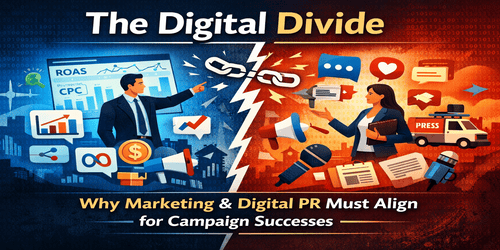
Digital marketers insist they own the online terrain because they control performance advertising and analytics. Digital PR and digital media practitioners argue that digital communication is more than dashboards and conversions – it is storytelling, credibility and reputation. The two groups work with the same platforms but speak different languages, and more often than not, they pull campaigns in opposite directions. Unfortunately for PR it appears businesses and organisations are only interested in the bottom line – profit – and PR is just learning how to present a dashboard that reflects its role in meeting the client’s profit requirement in achieving corporate goal.
Over the past two years, this conflict has become increasingly visible. Agencies are clashing internally. Brands are struggling to harmonise campaign messages. Consumers complain of “confusing brand behaviour.” And marketing directors say coordination costs are rising.
“It feels like we are running two campaigns every time we brief one,” says Tayo Ayodele, Digital Marketing Lead at a top Lagos fintech firm. “Marketing is tracking conversions. PR is tracking sentiment. Yet we are often talking to the same audience. The disconnection is real.”
The struggle between the two disciplines echoes earlier decades when PR and marketing fought over who controlled the consumer. But the move to digital deepened the conflict instead of resolving it. The rise of Meta Ads, Google Ads, influencer ecosystems and data analytics created a new power structure – one in which every team felt entitled to control the digital customer journey.
“Digital collapsed all our channels into one,” notes Prof. Isah Momoh, a media economist and communication scholar formerly at the School of Media and Communications, SMC, Pan-Atlantic University, PAU, Ibeju-Lekki, Lagos. “But instead of forming one strategic unit, teams imported their old territorial rivalries into the new environment. That is why the industry is experiencing identity confusion today.”
Digital PR teams manage brand narratives, reputation and influencer relations. Digital marketing teams optimise conversions and performance outcomes. Digital media teams manage distribution, publishing and brand-owned platforms. The tasks overlap. The philosophies clash. And consumers notice.
“When a brand sounds emotional in one post and salesy in the next, I just scroll past,” says Opeyemi Akindele, a Lagos-based consumer interviewed at Ikeja City Mall. “It feels like they don’t know who they want to be.”
The Campaign Exposed a Systemic Problem
In July 2024, a major FMCG brand launched a household cleaning product campaign across Lagos, Port Harcourt and Abuja. The PR team engineered a lifestyle narrative focusing on “clean, happy homes,” using family-centred influencers. The digital marketers, working independently, created a performance-driven message: “Buy now get 20% off.”
Within 72 hours, the brand’s Instagram feed alternated between emotional family storytelling and hard conversion messaging. Some influencers wrote heartfelt captions; meanwhile, programmatic ads displayed terse, transactional copy. “It was like watching two different brands talking at once,” recalls Chidimma Onuoha, a brand strategist who monitored the campaign. “The customer journey ended up looking like a tug of war.”
Internal sources confirmed that both teams developed their strategies without a joint planning session. No shared messaging document existed. No unified brand voice guide was created. Even the hashtags differed. Data from the post-campaign review revealed the consequences: Engagement quality dropped by nearly 30%. Influencer content produced high sentiment but low conversion alignment. Paid ads delivered clicks but lower-than-expected purchase intent. Consumers expressed confusion about the brand’s tone.
“These are the symptoms of a divided digital structure,” explains Kunle Adebayo, Managing Partner at a Lagos digital agency. “The issue is not competence. It is misalignment.”
A Fintech Case Study: When Misalignment Becomes a Crisis
The tension becomes catastrophic during crises. A notable example occurred when a fast-growing Nigerian fintech suffered a major service outage early last year. Thousands of customers flooded X demanding answers. The digital PR team immediately released apology messages, offered updates and engaged users empathetically. Unaware of the crisis timeline, the digital marketing team kept running scheduled ads promoting the platform as “fast, reliable, and always available.”
Screenshots of the contradictory messages went viral.
“It was a PR disaster created internally, not by the infrastructure failure,” says a former communications manager at the fintech who requested anonymity. “Had both teams been aligned, the situation would have been contained.”
Industry analysts estimate that the confusion cost the brand millions in goodwill – a steep price for a coordination failure.
What Industry Professionals are Saying
Across Nigeria’s IMC circles, practitioners admit that the rivalry is no longer sustainable. “Digital marketing is obsessed with numbers. Digital PR is obsessed with narratives. The problem is that brands need both, but teams behave like enemies instead of collaborators,” says Seyi Balogun, Head of Communications at a leading insurance firm. At a recent industry roundtable in Lagos, the conversations grew even more blunt.
“We cannot keep building campaigns where PR is telling a love story and marketing is shouting ‘buy now’. It confuses the algorithm, confuses the brand and confuses the audience,” warned Nnenna Abaga, who introduced herself as a digital media consultant. Consumers echo this sentiment. In a small BrandiQ poll conducted at Ikeja underbridge, near the LASUTH, 12 out of 20 professionals who responded to the team described Nigerian brand campaigns as “inconsistent,” “scattered,” or “trying too hard.”
The Data Suggests a New Reality
Recent reports from HubSpot, Cision and Kantar reinforce the need for integration. These reports indicate that brands with unified digital communication teams outperform siloed teams by up to 42% in engagement consistency. Reputation-driven campaigns with integrated performance layers deliver 27% better long-term conversion performance, whereas crisis responses handled jointly by marketing and PR minimise backlash by 50–60% compared to compartmentalised responses.
Independent analyst Ikem Nwosu observes that Nigerian brands are beginning to learn this lesson, although slowly. “Globally, PR now provides the brand’s meaning while marketing converts that meaning into measurable outcomes,” he says. “Where Nigeria struggles is that both units try to lead the entire process.”
The Industry Educators Weigh in
From the academic perspective, the failure is structural, not personal. “The digital ecosystem erased the old boundaries. What we need now is functional clarity, not territorial ownership,” says Prof. Silk Ugwu-Ogbu, a strategic and leadership communications lecturer at the Lagos Business School, LBS. He argues that Nigeria must adopt an “interdependent workflow model” in which PR shapes the narrative foundation, while marketing engineers the performance architecture around it. “Campaigns stop conflicting when both sides recognise that they are telling the same story at different speeds,” he added.
Why This Matters in 2026
Nigeria’s digital economy is projected to exceed $25 billion by 2026, according to industry estimates. This growth brings more competition, more campaigns and more consumer noise. Brands will require tighter strategic coherence. AI-generated content is multiplying messages. Programmatic advertising is amplifying them. Influencers are accelerating them. And social platforms are punishing inconsistency with lower reach.
“The algorithm is the new editor-in-chief,” says Dr James Agama, a corporate communications expert and digital media researcher. “It rewards coherence and punishes disorder. Brands without unified messaging lose visibility faster than they realise.”
Resolving the Crisis: What the Future Demands
The path forward is no longer theoretical. It is operational. Digital marketers must accept that not all value is captured in numbers. Digital PR teams must recognise that not all impact is visible in sentiment charts. Digital media managers must become strategic integrators, not just content distributors.
To do this, experts recommend: joint strategy rooms; shared dashboards; unified messaging documents; crisis alignment protocols; integrated influencer ecosystems; cross-functional content calendars; co-created KPI frameworks. When these structures are adopted, campaigns begin to operate like a single organism rather than fragmented limbs.
The New Breed of IMC Professional
Across Lagos and Abuja, a new generation of digital professionals is emerging – hybrid practitioners who straddle marketing, PR, analytics and storytelling. They are the ones industry leaders say will define the next decade. “Tomorrow’s IMC expert must think like a storyteller and calculate like an analyst,” says Dr. Olu Jacobs, a lecturer of digital communications. “If you understand only one side, you are already obsolete.”
The Road Ahead
The tension between digital marketing and digital PR is not a battle for superiority. It is a misunderstanding of purpose. Brands that continue treating both units as competing empires will continue wasting resources and diluting their identity. But brands that harmonise the two – with clarity, collaboration and strategic unity – will build not only stronger campaigns but stronger consumer relationships. The digital divide is real. But it is also solvable.
The question is whether the industry is ready to evolve.