

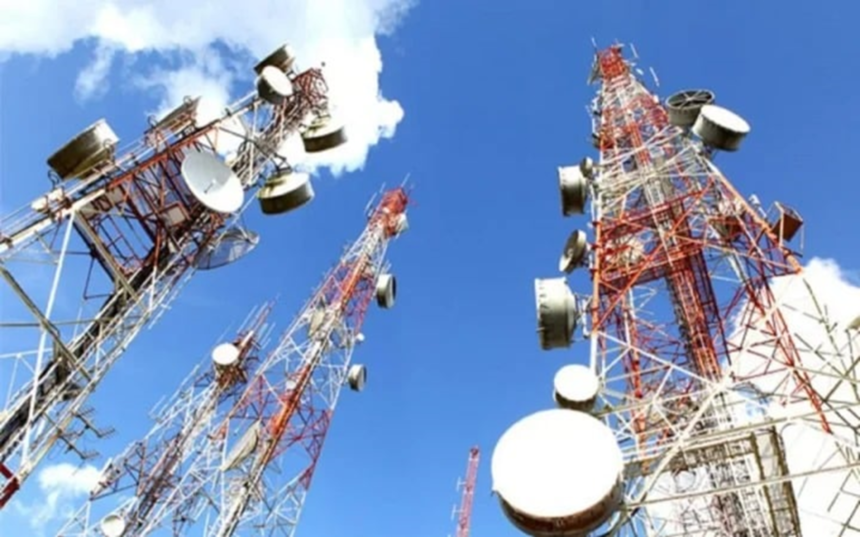
Telecommunications operators in Nigeria are positioning for a new wave of growth following the announcement of a $1bn artificial intelligence fund by the United Arab Emirates, a move analysts say could reshape the country’s digital infrastructure landscape and accelerate its transition into an AI-enabled economy.
The fund, unveiled under the UAE’s “AI for Development” initiative, is targeted at strengthening digital ecosystems across Africa, with Nigeria identified as a priority market due to its scale, demographic advantage, and growing digital ambitions.
For industry players, the significance of the initiative extends beyond capital injection—it represents a strategic shift in how global investment is beginning to view Africa’s telecom and technology sectors: not just as connectivity markets, but as platforms for artificial intelligence deployment and digital innovation.
From Connectivity to Intelligence Infrastructure
President of the Association of Telecommunications Companies of Nigeria, Tony Izuagbe Emoekpere, described the development as a timely intervention for an industry already experiencing rapid expansion.
“The growing partnership between Nigeria and the UAE is a very welcome development, especially as it is beginning to extend into technology and the digital economy,” he said.
“Nigeria’s digital space is expanding very quickly, and partnerships like this can help accelerate investments in areas such as broadband networks, data centres, cloud services, and even emerging technologies like artificial intelligence.”
His remarks point to a critical transition underway: the evolution of telecom infrastructure from basic connectivity to what industry experts now describe as “intelligence infrastructure”—the backbone required to power AI applications, data-driven services, and digital platforms at scale.
Why Nigeria Is Central to the UAE Strategy
According to UAE Assistant Minister of Foreign Affairs for International Development, Sultan Al Shamsi, Nigeria’s inclusion as a core partner reflects both its economic weight and strategic relevance in Africa’s digital future.
“Our $1bn AI for development initiative, designed to strengthen digital infrastructure across Africa, with Nigeria as a key partner, underscores our commitment to building long-term, future-ready cooperation,” he stated.
“We see Nigeria not only as a major economy, but as a country positioned to lead in shaping Africa’s next phase of growth.”
This positioning aligns with broader economic trends. Bilateral trade between Nigeria and the UAE reached $4.3bn in 2024 and approximately $3.1bn within the first nine months of 2025, signalling deepening commercial ties across logistics, agriculture, and increasingly, digital services.
The Demand-Side Advantage
Nigeria’s attractiveness to telecom and technology investors remains anchored in its demographics and consumption patterns.
With a large and youthful population, rising smartphone penetration, and increasing reliance on digital services—from fintech to entertainment and e-commerce—the demand for data continues to surge.
“We have a very large population, and a significant portion of that population is young and increasingly comfortable with technology,” Emoekpere noted.
“Smartphone usage is rising, and people are consuming more data every year as they rely more on digital services for business, communication, education, entertainment, and financial services.”
This demand-side momentum creates a strong commercial case for investment in fibre networks, broadband expansion, and cloud infrastructure—areas where Nigeria still faces significant gaps.
Closing the Infrastructure Deficit
Despite its growth trajectory, Nigeria’s digital economy remains constrained by infrastructure limitations. Industry stakeholders estimate that billions of dollars are still required to expand fibre penetration, improve broadband quality, and develop hyperscale data centres capable of supporting AI workloads.
Emoekpere emphasised that partnerships like the UAE initiative could help bridge this gap.
“Nigeria still needs significant investment in broadband networks, fibre infrastructure, data centres, and other technologies that support the digital economy. Partnerships with countries like the UAE can bring in the capital, expertise, and technology needed to strengthen Nigeria’s connectivity ecosystem,” he said.
Where the Money Will Flow
Unlike traditional aid-driven models, the UAE’s AI fund is structured around flexibility and project readiness, allowing capital to be deployed based on national priorities and execution capacity.
According to Al Shamsi, key sectors expected to benefit include:
- Government digital services and public sector transformation
- Fintech and financial inclusion platforms
- Digital health systems
- Smart agriculture solutions
- Public data infrastructure
- Core telecom and broadband networks
Crucially, the initiative places strong emphasis on local capacity development, requiring that supported projects contribute to knowledge transfer and build systems that can be sustained and scaled within Nigeria.
“The initiative emphasises building local capacity in data management and model development, rather than merely using local data for external solutions,” Al Shamsi explained.
A Strategic Inflection Point for Telecom Operators
For telecom companies, the implications are significant.
The AI fund effectively expands the industry’s value chain—from providing connectivity to enabling data ecosystems, cloud services, and AI-driven applications. This opens new revenue streams beyond traditional voice and data services, including enterprise solutions, smart infrastructure, and platform-based services.
It also intensifies competition, as global capital and expertise enter the market, raising the bar for local operators in terms of innovation, service quality, and infrastructure deployment.
BrandiQ Insight
The UAE’s $1bn AI fund marks a strategic inflection point for Nigeria’s telecom sector. The future of the industry will no longer be defined solely by network coverage, but by its ability to power intelligent systems, data economies, and AI-driven services.
For forward-looking operators, the opportunity is clear: evolve from telecom providers into digital infrastructure companies at the heart of Africa’s AI economy.