
By Desmond Ekeh
“I read him avidly.” I also read with the same zest Dele Giwa, Ray Ekpu, Yakubu Mohammed, Soji Akinrinade and the other Newswatch star writers. I never met him, but I read him.
Unfortunately, Dan is no more. Yet, he lives in the heart of men – his family, friends, and beloved ones. In the heart of Nigerians.
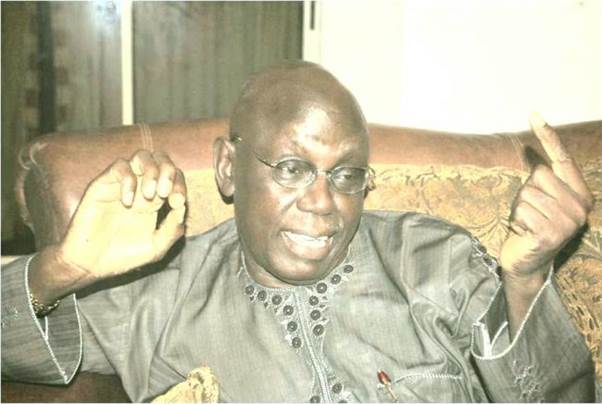
Nigeria’s media landscape has lost one of its most principled voices. Dan Agbese, veteran journalist, author, and co-founder of Newswatch magazine, passed away at the age of 81, according to family statement.
Born on May 12, 1944, in Agila, Benue State, Agbese built a career defined not just by longevity but by intellectual rigor, integrity, and a capacity for incisive social commentary. Before launching Newswatch alongside Dele Giwa, Ray Ekpu, and Yakubu Mohammed, he served as editor of The Nigeria Standard and New Nigerian newspapers, and later became General Manager of Radio Benue in Makurdi.
In the family’s announcement, they said Agbese “transited to eternal glory” on Monday morning, November 17, 2025. Burial arrangements will be disclosed in due course. He leaves behind his wife, Chief Rose Agbese, six children, and seven grandchildren.
Agbese’s journalistic career was not merely notable – it was transformative. As Editor-in-Chief of Newswatch until April 2010, he was part of a pioneering generation that pushed investigative journalism forward in Nigeria. His bylines and weekly columns in publications like Daily Trust and The Guardian reflected a literate, disciplined journalist who cared deeply about Nigeria’s democratic project.
Colleagues and industry groups have since hailed his death as the end of an era. The League of Nigerian Columnists praised him as “a steward of public trust … whose analytical depth, elegant prose, and disciplined judgment set standards that generations continue to aspire to.” Former Senate President David Mark, among others, described Agbese as a “pathfinder – whose pen shaped public discourse” and whose absence leaves a monumental gap.
Agbese was also an accomplished author. His books – among them Nigeria Their Nigeria, Fellow Nigerians, The Reporter’s Companion, Style: A Guide to Good Writing, and The Columnist’s Companion: The Art and Craft of Column Writing – remain key texts for journalists and writers.
In reflecting on Agbese’s legacy, one cannot separate his contributions to journalism from the vital role journalism plays in a democracy. He was part of a generation that believed the press was more than a business: it was a public institution. At Newswatch, he helped build a magazine that would challenge power, interrogate authority, and hold public discourse to a high standard – echoing the ideals of classical social theory, from the Socratic quest for truth to the Habermasian model of public reason.
Today, as journalism increasingly grapples with commercialisation, viral content, and polarized narratives, Agbese’s life stands as a reminder that there once was – and must still be – an ethic of service, discipline, and intellectual honesty.
“It is not just that he reported the news,” said Prof. Isa Momoh, a communications scholar, “but that he thought deeply about the news: its causes, its meaning, its impact on our social contract.” His passing invites us to ask whether modern media still sees its role as guardians of public trust or merely content producers chasing clicks.
Indeed, the ethos of journalism in Nigeria – and across the globe – is under pressure. Many media houses have become deeply commercial, prioritising traffic and advertising revenue over investigative reporting and objective commentary. The loss of figures like Agbese highlights the risk: when journalism becomes just another business, its foundational purpose may be eroded.
Agbese’s own career offers a counter-narrative. Even late in his life, he remained a columnist, a thinker, and a mentor. He co-ran a media consultancy with like-minded colleagues – Ray Ekpu, Yakubu Muhammed, and Soji Akinrinade – demonstrating that he never abandoned his commitment to building professionalism in the industry.
His style was not showy. He did not rely on sensationalism. He did not trade in clickbait. Instead, he wielded satire, clarity, and disciplined argument. In many ways, he embodied a philosophical ideal of journalism – one that aligns with Aristotle’s virtue ethics: the medium of public reason, speaking truth to power, and cultivating wisdom in public life.
Agbese’s death should not only be mourned, but must also serve as a wake-up call for the IMC industry, for media houses, and for young journalists.
First, we must reaffirm the value of independent commentary. Agbese’s columns were not branded content – they were reasoned reflections rooted in truth and experience. Today’s young journalists must be encouraged to write with intellectual honesty, not simply chase trending topics.
Second, institutions must re-invest in long-form journalism and investigative reporting. The commercialisation of media does not have to mean the death of depth. Media owners and sponsors must allocate resources not just to content that brings eyeballs- but to work that builds civic trust.
Third, we need stronger mentorship. Agbese supported younger journalists, ran a consultancy, and coached his peers. His loss leaves a gap in that pipeline of ethical leadership. The industry should establish more formal mentorship programs, fellowships, and platforms where seasoned journalists can shape the next generation.
Fourth, journalists and editors should recommit to professional ethics. Agbese’s disciplined style was a social good. In his memory, media houses could reinvigorate ethics training, editorial charters, and peer review mechanisms to protect against sensationalism.
Philosophically, Agbese’s life and work invite reflection on the nature of the public intellectual and the journalist’s role in society. From a Platonist vantage, one may see him as someone striving toward the ideal of the philosopher-king in journalistic form: not craving power, but seeking truth and leading society’s conversation. From an Aristotelian frame, his consistent integrity, his temperate satire, and his pursuit of excellence suggest a life lived in moral virtue – not for personal gain, but for the flourishing of his community.
As social theorist Jürgen Habermas might argue, Agbese’s work contributed to the “public sphere” – the space where citizens deliberate, reason, and challenge power. In today’s disordered media environment, that public sphere is under threat. His passing thus signals not only the death of a person but a moment for collective self-reflection: can journalism still be the space of reasoned dissent and civic engagement in Nigeria?
Dan Agbese may have “transited to eternal glory,” as his family put it, but his legacy remains deeply relevant. In an era of media fragmentation, polarised discourse, and commercial pressures, his life stands as a testament to what journalism should aspire to be: principled, reflective, courageous.
For the IMC industry, for media institutions, and for civil society, his passing is a call to action. We must do more than mourn. We must recommit – to ethical practice, to public service, to nurturing voices of reason. Only then can the profession honor Dan Agbese’s memory in the most fitting way: by building robust journalism that strengthens, rather than corrodes, democracy.
Dr. Desmond Ekeh, publisher of BrandiQ, researches in the intersection of philosophy, politics, and communication