
By using this site, you agree to the Privacy Policy and Terms of Use.
Accept
BrandiQBrandiQBrandiQ
  • Brand & Marketing
  • Industry News
  • Market Intelligence
  • Business & Economy
  • Technology & Digital
Reading: Power Trade Strains in West Africa: Benin, Togo and Niger Owe Nigeria $9.55m in Electricity Payments
Share
0

No products in the cart.

Notification Show More
Font ResizerAa
BrandiQBrandiQ
0
Font ResizerAa
  • Brand & Marketing
  • Industry News
  • Market Intelligence
Have an existing account? Sign In
Follow US
© 2026 Brand IQ. All Rights Reserved.
Business & Economy

Power Trade Strains in West Africa: Benin, Togo and Niger Owe Nigeria $9.55m in Electricity Payments

BrandiQ Analyst
Last updated: April 15, 2026 9:01 pm
BrandiQ Analyst
April 15, 2026
Share
7 Min Read
electricity
SHARE

By BrandiQ Analyst

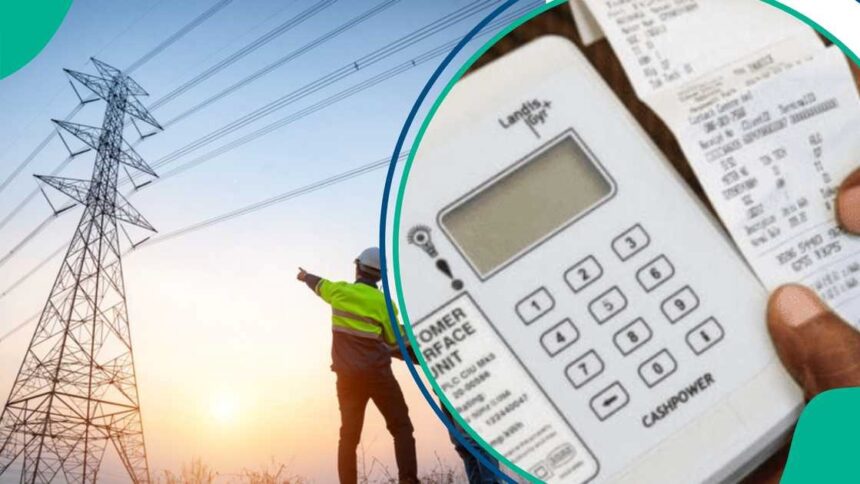
Electricity trade within West Africa is often framed as a model of regional cooperation – an interconnected grid designed to balance supply and demand across borders. Yet the latest figures from Nigeria’s power market suggest a more complicated reality, where cross-border energy flows are not always matched by timely financial settlement.

- Advertisement -

According to the fourth quarter 2025 report of the Nigerian Electricity Regulatory Commission, three neighbouring countries – Benin, Togo and Niger – collectively failed to remit $9.55m for electricity supplied by Nigeria during the period. The shortfall highlights persistent weaknesses in the commercial framework underpinning regional power trade.

The figures are stark. Of the $20.44m invoiced to international bilateral customers across the three countries, only $10.89m was paid, representing a remittance performance of just 53.28 per cent. In practical terms, for every $100 worth of electricity supplied, barely $53 was recovered – leaving nearly half of the value unpaid.

Such gaps are not merely accounting discrepancies. They point to deeper structural tensions within the West African electricity market, where the physical integration of grids has outpaced the financial discipline required to sustain them.

- Advertisement -

The debts are owed by national utilities in each country. Société Béninoise d’Energie Electrique in Benin received power through multiple Nigerian generation companies, including Paras and Transcorp’s Ughelli and Afam 3 plants. In Togo, Compagnie Energie Electrique du Togo was supplied via Paras and Odukpani, while Société Nigerienne d’Electricite in Niger drew electricity from Mainstream Energy.

Performance across these bilateral contracts varied widely, revealing an uneven pattern of compliance. Some arrangements showed moderate discipline. Paras-SBEE in Benin, for instance, paid 68.16 per cent of its $2.45m invoice, while Paras-CEET in Togo remitted 64.97 per cent of $2.18m billed.

Others fared significantly worse. Transcorp’s Ughelli plant recorded one of the weakest outcomes, with just 12.30 per cent of a $3.74m invoice paid by SBEE. At the extreme end, the Odukpani-CEET contract in Togo saw no payment at all, with a full $2.18m outstanding.

There were, however, pockets of stronger performance. Transcorp’s Afam 3 plant achieved an 82.31 per cent remittance rate from SBEE, while Mainstream Energy’s supply to NIGELEC in Niger recorded a 68.63 per cent payment rate on a $5.96m invoice – the largest single billing in the period.

- Advertisement -

These variations underscore a central challenge in regional electricity markets: contractual agreements may be standardised, but payment behaviour is not. Differences in fiscal capacity, currency stability and domestic energy pricing policies often shape how, and whether, obligations are met.

There are also signs of partial recovery. The report notes that Société Béninoise d’Energie Electrique made additional payments totalling $3.54m to settle outstanding invoices from previous quarters, covering both Ughelli and Afam 3 supplies. A domestic customer, APLE, similarly cleared N141m in arrears.

Even so, the broader picture remains one of imbalance. While Nigeria continues to export electricity to its neighbours, the financial returns from these transactions are inconsistent, raising questions about sustainability.

- Advertisement -

The contrast with domestic performance is instructive. Within Nigeria, bilateral customers demonstrated significantly stronger payment discipline, remitting N3.5bn out of N4.17bn invoiced – an 84.23 per cent performance rate. In effect, local customers paid 84 kobo for every naira billed, compared with just over half of invoiced amounts recovered from international buyers.

This divergence highlights the risks associated with cross-border energy trade in regions where economic conditions vary widely. While interconnected grids offer efficiency gains, they also expose suppliers to external credit risk – particularly when counterparties operate in weaker fiscal environments.

Even within the domestic market, challenges persist. The Ajaokuta Steel Company, classified as a special customer, was invoiced N1.26bn during the quarter but made no payment. Such cases illustrate that payment discipline is not solely a cross-border issue, but part of a broader liquidity challenge within the electricity value chain.

At a systemic level, these dynamics reflect the enduring fragility of Nigeria’s power sector. Generation companies supply electricity, but revenue collection remains uneven, constrained by tariff structures, distribution inefficiencies and institutional bottlenecks. When these domestic weaknesses intersect with cross-border trade, the financial strain is amplified.

- Advertisement -

For policymakers, the implications are significant. Regional electricity trade is often promoted as a pathway to optimise resources, reduce costs and enhance energy security. However, without robust enforcement mechanisms and stronger financial guarantees, such arrangements risk becoming asymmetric – where power flows outward more reliably than payments flow inward.

The data, based on reconciled market settlements submitted as of April 2, 2026, therefore tells a broader story. It is not simply about unpaid invoices, but about the evolving economics of regional integration. As Nigeria positions itself as a power hub within West Africa, the viability of that role will depend not only on generation capacity, but also on the credibility of its commercial framework.

In the absence of consistent payment discipline, the incentives for continued supply may weaken. Generation companies, already operating within tight financial margins, may become more cautious in extending cross-border contracts without stronger assurances.

For neighbouring countries, the challenge is equally pressing. Reliable electricity imports can support industrial activity and economic growth, but only if they are underpinned by sustainable financing arrangements. Persistent arrears risk undermining both supply stability and regional cooperation.

The tension, then, is clear. West Africa’s energy future depends on deeper integration, yet that integration requires a level of financial coordination that remains elusive. Bridging this gap will demand more than technical connectivity. It will require reforms that align incentives, strengthen accountability and ensure that the economics of power trade are as robust as its engineering.

Until then, the region’s electricity market will remain caught between ambition and reality -connected by wires, but divided by payments.


- Advertisement -

You Might Also Like

The Perception Tax: Africa’s Most Expensive Misconception
Financial Literacy Emerges as Strategic Economic Lever – FMDQ COO
Nigeria, South Africa Energy Partnership: Why Africa’s Two Largest Economies Are Deepening Energy Ties for Trade, Security and Growth
Atlas Core Partners Oyo Govt to Build CNG Station
YouTube reaches agreement with Fox to prevent disruption
Share This Article
Facebook Whatsapp Whatsapp LinkedIn Telegram Email Copy Link Print
What do you think?
Love0
Sad0
Happy0
Sleepy0
Angry0
Dead0
Surprise0
Wink0
Previous Article afc AFC Closes Côte d’Ivoire’s First Project Finance Green Bond: A New Model for African-Led Infrastructure Capital
Next Article gig economy Nigeria’s $5.17bn Gig Economy: How Ride-Hailing and E-commerce Are Rewiring Work, Income and Informality
Leave a Comment

Leave a Reply Cancel reply

Your email address will not be published. Required fields are marked *

Traditional Egungun masquerades performing during the 2026 World Egungun Festival sponsored by Seaman’s Schnapps.
Seaman’s Schnapps Deepens Cultural Diplomacy at World Egungun Festival
Business & Economy
Speakers and attendees gathered during the Imperfectly Awesome Conversations 4.0 event in Lagos discussing leadership, resilience, and authenticity.
‘Enough’ and NESCAFE Next Level Promo: How Philosophy is Rewiring Leadership and Brand Power in an Age of Pressure
Market Intelligence
AI Advertising Shake-Up: Meta Surges, YouTube Lags as Data Power Reshapes Global Ad Economy By Desmond Ekeh The first quarter of 2026 delivers a clear verdict on the future of digital advertising: scale alone is no longer enough. In a data-driven economy increasingly shaped by artificial intelligence, performance-not presence-is now the defining currency. Fresh analysis from WARC shows a widening divergence among Big Tech platforms, with Meta Platforms outperforming expectations, Amazon holding steady, and YouTube struggling to convert attention into revenue. At stake is more than quarterly earnings. These shifts are redefining how data, AI, and platform economics interact across Nigeria, Africa, and the global marketplace. The Data Behind the Divergence Below is a simplified analytical snapshot of Q1 2026 performance relative to projections: Platform Actual Ad Revenue Forecast Variance Strategic Signal Meta $55.0bn $54.1bn +2.3pp AI translating directly into monetisation Google Search $60.4bn +13.7% growth expected +5.4pp Search remains dominant, AI enhances usage Amazon Ads $17.2bn $17.3bn est. -0.4pp Stable, full-funnel dominance YouTube $9.98bn $10.05bn -1.9pp Engagement not converting to revenue Google Display Network Decline Decline expected -1.6pp worse Structural weakness in open web Meta and the Economics of Intelligent Attention Meta’s outperformance is not accidental; it reflects a deeper structural advantage. By embedding AI into content ranking, ad targeting, and optimisation, the company has effectively closed the loop between attention and monetisation. The implication is profound: AI is no longer a support tool - it is now the core infrastructure of revenue generation. For emerging markets like Nigeria, where platforms such as Instagram and Facebook dominate digital consumption, this signals a future where: • Advertising efficiency improves dramatically • Smaller businesses gain access to precision targeting • Platform dependency deepens Amazon and the Rise of Transactional Advertising Amazon continues to redefine advertising by collapsing the distance between exposure and purchase. Its retail media model - built on first-party data and purchase intent - remains one of the most powerful propositions in modern marketing. For the global economy, this signals a shift toward closed-loop ecosystems, where: • Every ad impression is measurable • Attribution becomes near-perfect • Marketing budgets increasingly migrate to platforms closest to transaction This has direct implications for African e-commerce ecosystems such as Jumia and Konga, which must now evolve beyond marketplace models into data-driven advertising platforms. YouTube and the Monetisation Paradox Despite massive engagement, YouTube continues to underperform expectations. The challenge is structural: short-form video (driven by platforms like TikTok) captures attention at scale but monetises less efficiently. This exposes a critical tension in the digital economy: • Attention is abundant • Monetisable attention is scarce For content creators across Africa and globally, this suggests that visibility does not equal value unless supported by strong monetisation frameworks. Global Implications: A Data-Centric Advertising Order With Meta, Amazon, and Alphabet collectively controlling over 58% of global ad spend (excluding China), their performance sets the tone for the global economy. United States The US remains the epicentre of AI-driven advertising innovation. The ability of firms like Alphabet Inc. and Meta to convert AI into revenue reinforces America’s dominance in the digital economy. United Kingdom The UK advertising industry, one of the most mature globally, faces increasing pressure to adapt. Agencies must now transition from creative-first models to data-led, AI-enabled strategy firms or risk obsolescence. Africa (Nigeria in focus) Africa stands at a critical inflection point: • Digital ad spend will grow, but largely captured by global platforms • Local platforms risk marginalisation without investment in data infrastructure • Governments must confront issues of data sovereignty and digital taxation For Nigeria, this reinforces the urgency of building indigenous data ecosystems - from fintech to media - to avoid becoming merely a consumption market. Global Economy The broader implication is the emergence of a data hierarchy: • Platforms with first-party data dominate • AI capability determines growth trajectory • Traditional media continues structural decline The Strategic Inflection Point What this quarter ultimately reveals is a shift from digital advertising to intelligent advertising systems. Meta’s success shows what happens when AI enhances both engagement and monetisation simultaneously. Amazon demonstrates the power of proximity to purchase. Alphabet proves search remains resilient, even as its broader ecosystem fragments. And YouTube’s struggle offers a cautionary lesson: in the age of AI, attention alone is no longer enough. BrandiQ Insight The future of advertising will not be decided by who captures the most users, but by who understands them best. Data is no longer an asset; it is infrastructure. AI is no longer innovation; it is execution. For businesses, governments, and institutions - from Lagos to London, New York to Nairobi - the message is clear: Those who control data, design algorithms, and own the customer journey will define the next phase of the global economy.
AI Advertising Shake-Up: Meta Surges, YouTube Lags as Data Power Reshapes Global Ad Economy
Market Intelligence
How to evaluate a business
From Idea to Empire: A Simple but Powerful Framework to Evaluate Any Business
Market Intelligence
- Advertisement -

You Might Also Like

Soft Drinks Tax Hike Harmful to Economy – CPPE

December 2, 2025

Turkish Airlines Seals Landmark Chinese Financing Deal

November 5, 2025

Nestlé Drives Circular Economy Through Plastic Recycling

November 5, 2025
dhl

Nigeria Emerges Among Fastest-Rising Economies in Global Trade Integration – DHL Connectedness Report 2026

March 18, 2026
global trade

Global Trade Now Moves 500bn Tonnes of “Virtual Water” – World Bank

March 25, 2026
seplat

Seplat Completes Onshore Assets Conversion

December 24, 2025

Dangote Cement Promotes Youth Empowerment Through Sports, Education

October 30, 2025

Heineken Closes Lagos Fashion Week in Style

November 10, 2025
- Advertisement -
Facebook Twitter Youtube

Subscribe to BrandiQ Newsletter

Subscribe to our newsletter to get our latest articles instantly! Don't worry, we don't spam.
Brand IQ

BrandiQ is Africa’s leading digital platform for brand strategy, business innovation, marketing insights, and data-backed intelligence shaping African markets.

  • News
  • Business Insight
  • About Us
  • Contact Us
  • Privacy Policy
  • Terms & Conditions

Copyright 2013 – 2026 BrandiQ. All Rights Reserved

Welcome Back!

Sign in to your account

Username or Email Address
Password

Lost your password?