

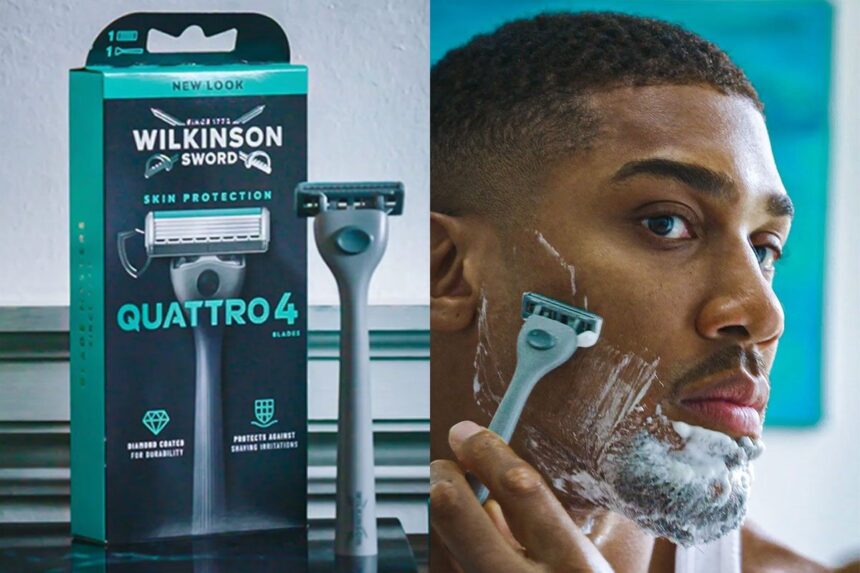
When heritage grooming brand Wilkinson Sword enlisted heavyweight boxer Anthony Joshua to promote its upgraded Quattro razor, the move was about far more than attaching a famous face to a product. It was a carefully judged brand decision that speaks to the enduring commercial value of celebrity influence, the psychology of male grooming, and the changing balance between traditional endorsement and digital creator culture.
Created by Buddy Media, the campaign arrives at a time when much of the advertising industry is focused on micro-influencers, creator communities and performance-led social media campaigns. Those tools are undoubtedly powerful. Yet the Wilkinson Sword strategy is a reminder that celebrity endorsement remains highly effective when the match between personality and product is strong.
For marketers in Nigeria, Africa and other emerging markets, the campaign offers an important lesson: in a fragmented media age, star power still works—provided it is used with discipline, relevance and strategic clarity.
Why Anthony Joshua Is a Smart Brand Choice
Anthony Joshua is not simply a sportsman. He is a global personality whose public image has been built around discipline, resilience, strength, confidence and controlled performance. Those values align naturally with a men’s grooming brand seeking to present an upgraded razor as precise, reliable and high-performing.
That alignment matters because consumers rarely buy products based on utility alone. They buy what products symbolise. A razor is not just a shaving tool; it is connected to self-presentation, readiness, confidence and routine.
Joshua’s image helps transfer those emotional associations to the product. In advertising terms, this is known as symbolic fit—the point where the personality of the ambassador reinforces the personality of the brand.
Many celebrity endorsements fail because there is no meaningful connection between the person and the product. This campaign appears to avoid that trap.
Why This Matters in the Grooming Market
The men’s grooming sector has become increasingly competitive. Consumers can now choose between traditional razors, electric shavers, beard trimmers, subscription blades, skincare systems and hybrid grooming products. In such a crowded market, product improvements alone may not create sufficient attention. Brands need narratives that help consumers remember and emotionally process the offer.
That is where Joshua becomes valuable.
Instead of presenting the Quattro razor simply as an upgraded product, the campaign can frame it as a tool associated with discipline, sharpness and performance. Those ideas are often more persuasive than technical specifications. This is one reason some heritage brands continue to rely on carefully selected ambassadors. They help convert product features into emotionally resonant meaning.
Celebrity Endorsement Is Evolving, Not Dying
There is a growing tendency in marketing circles to speak as though celebrity advertising has been replaced entirely by influencers. That view is simplistic. Influencer marketing excels at trust-building, niche targeting and continuous engagement. Celebrity endorsement excels at scale, recognition and rapid awareness.
A well-known figure such as Anthony Joshua delivers immediate stopping power in a cluttered environment. Audiences know him instantly. That reduces the time required to establish attention and credibility.
In practical terms, celebrity endorsement still offers three strong advantages:
- Instant recognition across broad audiences
- Fast transfer of credibility and aspirational value
- Cross-platform adaptability across TV, digital, outdoor and retail
For a mass-market consumer brand, those advantages remain commercially significant.
Why Anthony Joshua Resonates Beyond Britain
Joshua’s value also extends beyond the UK market. He carries global appeal, particularly across African and diaspora audiences. As a high-achieving international athlete with visible African heritage, he embodies a form of success that feels both aspirational and culturally relatable.
That matters for multinational brands operating across multiple regions.
Consumers in Nigeria, Ghana, Kenya, South Africa and other markets often respond positively to personalities who combine international status with cultural familiarity. Joshua occupies that rare space.
For brands, such figures are especially useful because they bridge local relevance and global prestige.
What This Says About Male Consumer Behaviour
Male grooming has evolved significantly over the past decade. It is no longer marketed only around hygiene or necessity. Increasingly, it is linked to lifestyle identity.
Today’s male grooming messaging often revolves around:
- Confidence
- Discipline
- Presentation
- Attractiveness
- Professionalism
- Self-care
That shift means grooming brands must speak not only to function but also to identity. Joshua’s presence reinforces a modern masculine archetype built around self-control rather than vanity. That is a subtle but important distinction. He signals strength and preparation, making grooming appear purposeful rather than superficial.
This is likely to resonate strongly with male consumers.
Lessons for African Brands
There is a clear lesson here for African marketers. Many companies either overuse celebrity endorsements without strategic fit or dismiss them entirely in favour of trend-driven digital campaigns. Both extremes are flawed. The real question is not whether to use celebrities, but when and how to use them.
Celebrity endorsement works best when:
- The ambassador naturally fits the category
- The personality reflects the brand’s values
- The campaign idea is memorable
- The product benefit remains central
- The media strategy supports broad reach
Anthony Joshua and Wilkinson Sword appear to meet those conditions.
African brands in categories such as telecoms, banking, grooming, beverages, fashion and mobility should take note.
Why Heritage Brands Need Reinvention
Wilkinson Sword is an established name. Like many legacy brands, it must compete not only against rivals but against perceptions of age and familiarity. Older brands often face a difficult challenge: how to remain trusted while also appearing contemporary.
Strategic partnerships can help solve this. By pairing heritage with a modern cultural figure, brands refresh relevance without abandoning credibility. This is especially useful in categories where younger consumers are open to alternatives and new entrants. For legacy African brands facing similar challenges, this model is instructive.
The Role of Creative Execution
Even the best ambassador can be wasted by weak creative thinking. This is where Buddy Media’s role becomes important. A successful endorsement campaign must ensure that consumers remember the product, not only the celebrity. The creative idea must connect Joshua’s image directly to the Quattro razor’s improvement story.
If the audience recalls strength, precision and sharpness—and links those qualities to Wilkinson Sword – the campaign succeeds. If they remember only Anthony Joshua, the value leaks away.
This is why creative agencies remain critical. They convert fame into brand equity.
Editorial Verdict
Wilkinson Sword’s Anthony Joshua campaign is a timely reminder that celebrity endorsement remains powerful in modern advertising when executed intelligently. The rise of influencers has not eliminated the value of stars. It has simply made marketers more selective about when to use them.
Influencers can build communities. Celebrities can create instant scale. The most sophisticated brands understand the difference and deploy each accordingly. For African marketers navigating increasingly crowded consumer markets, the lesson is clear. Fame alone is not enough. But when fame, fit and product truth align, star power still cuts through.
And in an age of endless scrolling and shrinking attention spans, that remains a sharp commercial advantage.