


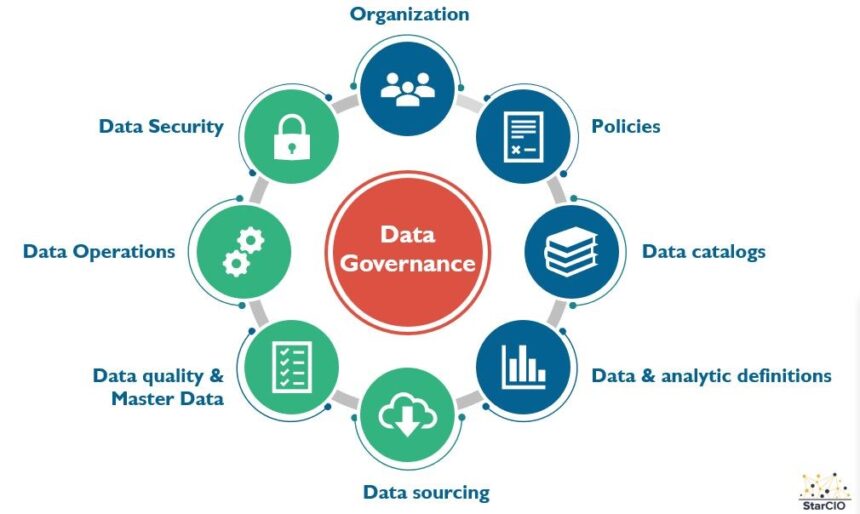
Nigeria’s race to build a competitive digital economy may depend less on flashy artificial intelligence announcements and more on a quieter, less glamorous discipline: data governance.
That was the central insight from technology entrepreneur and Metaheuristic founder, Toye Apampa, whose recent comments offer one of the clearest diagnoses yet of why some Nigerian sectors are advancing rapidly in digital transformation while others remain stuck in analogue habits.
His thesis is simple but profound. Nigerian banks and telecommunications firms are emerging as leaders in digital governance because they have spent years under tough regulators, managing sensitive customer data, and building systems that must work at scale. Other sectors, particularly health and education, risk falling behind because their data systems remain fragmented, poorly integrated, and weakly governed.
For BrandiQ readers across Nigeria, the United States, the United Kingdom and wider Africa, the implications stretch far beyond compliance. This is about economic competitiveness, fintech growth, foreign investment, productivity and whether African institutions can truly participate in the AI age.
Why Data Governance Is the Real Infrastructure of the Digital Economy
Many people think digital transformation begins with apps, websites, automation or AI tools. In reality, it begins with trust in data. If a company cannot verify customer identities, reconcile transactions, understand behaviour patterns or ensure privacy compliance, then even the best technology stack becomes unstable. This is why global firms in London, New York and Singapore invest heavily in data governance frameworks. Before AI models are deployed, organisations first ask:
- Where is our data stored?
- Who owns it?
- Is it accurate?
- Can we legally use it?
- Can we explain decisions made from it?
These questions may sound technical, but they shape billion-dollar decisions in lending, insurance, retail, healthcare and government.
Nigeria is now entering the same phase.
Why Nigerian Banks Are Ahead of the Curve
If one sector has shown that structured regulation can create digital winners, it is banking.
Nigeria’s financial institutions have spent over a decade adapting to:
- KYC and identity verification rules
- Anti money laundering compliance
- Fraud monitoring systems
- Real time payment infrastructure
- Credit risk analytics
- Cybersecurity standards
- Consumer protection frameworks
This regulatory pressure forced banks to build data discipline early.
That is why many of Nigeria’s most advanced digital experiences today come from banks and fintech-linked institutions: instant transfers, mobile lending, behavioural credit scoring, digital wallets, personalised offers and automated customer service. The Central Bank of Nigeria, despite controversies around monetary policy, has historically pushed financial digitisation harder than many African peers. This created an unintended advantage: Nigerian banks are more AI ready than many other sectors.
Why Telcos Are Also Winning
Telecommunications companies such as MTN, Airtel and Globacom operate on enormous data volumes every second.
They manage:
- Customer identity records
- Billing systems
- Network performance data
- Usage behaviour
- Mobile money transactions
- Location intelligence
- Churn prediction models
To survive competitively, telcos must analyse millions of interactions daily. This naturally builds the muscle required for AI deployment. As Nigeria expands broadband, digital payments and mobile commerce, telcos are no longer just connectivity providers. They are data companies with distribution power. That is why many future African digital platforms may emerge from the intersection of telecom infrastructure, finance and AI.
Why Health and Education Risk Falling Behind
While banks and telcos modernise, sectors like healthcare and education face a different reality.
Many institutions still rely on:
- Paper records
- Disconnected databases
- Manual workflows
- Poor identity systems
- Limited interoperability
- Weak cybersecurity controls
This means hospitals often cannot build a unified patient history. Schools struggle with learning analytics. Governments cannot generate reliable sector insights quickly.
The danger is clear.
If Nigeria digitises these sectors without fixing data foundations first, it may simply automate inefficiency. That lesson has been learned painfully in parts of the UK and Europe, where legacy systems now cost billions to replace. Nigeria still has a chance to leapfrog.
AI Readiness Is Not About Chatbots
Across Africa, AI conversations often focus on chatbots, content tools and automation headlines.
But true enterprise AI readiness is deeper.
It means:
- Clean structured data
- Strong governance frameworks
- Ethical oversight
- Staff capability
- Process redesign
- Legal compliance
- Scalable infrastructure
Without these, AI becomes corporate theatre.
Boards may announce innovation while internal systems remain broken. That is why many global experts now argue that the biggest winners of the next decade will not be firms with the loudest AI branding, but those with the strongest data architecture.
What This Means for Nigeria’s Economy
The stakes are enormous.
If Nigeria gets governance right, several economic gains become possible.
1. Stronger Fintech Leadership
Nigeria already leads much of Africa in fintech innovation. Better data systems can deepen credit markets, insurance penetration, SME financing and wealth management.
2. More Foreign Investment
US, UK and European investors increasingly examine governance maturity before allocating capital. Transparent data systems reduce risk perception.
3. Better Public Services
AI supported health diagnostics, tax administration, traffic management and education tools require reliable public data systems.
4. Exportable Digital Services
Nigeria can build SaaS, analytics and AI products for Africa and diaspora markets if trust infrastructure is strong.
5. Job Creation
The data economy creates demand for analysts, engineers, privacy officers, product managers and digital strategists.
Why the US and UK Should Pay Attention
For BrandiQ’s growing readers in America and Britain, Nigeria’s governance story matters more than many assume.
A Young Digital Market
Nigeria has one of the world’s youngest populations and one of Africa’s largest internet user bases. Stronger governance means a bigger consumer and enterprise opportunity.
Fintech Expansion
US and UK venture capital already track African fintech closely. Better data maturity improves investment confidence.
Outsourcing and Talent
As remote work grows, Nigeria can become a larger source of digital talent, analytics services and engineering capability.
Trade and Market Access
Global firms entering Africa need compliant data ecosystems. Nigeria’s progress can influence regional standards.
The Policy Reform That Could Change Everything
One of the smartest recommendations from the discussion is this:
Before any public institution buys an AI system, it should prove the maturity of the data feeding that system.
That means asking:
- Is the data accurate?
- Is it lawful to use?
- Is it complete?
- Is bias understood?
- Can outputs be audited?
This single rule could prevent wasteful AI procurement and redirect spending toward foundations first.
Too many governments globally buy expensive technology before fixing broken records systems.
Nigeria should avoid that trap.
Lessons for Nigerian Brands and Businesses
This conversation is not only for banks or government agencies.
Every serious Nigerian company should now ask:
- Do we have one customer view across systems?
- Can marketing, sales and finance trust the same numbers?
- Are decisions based on clean data?
- Is customer consent documented?
- Can we personalise experiences responsibly?
Brands that solve these questions gain sharper strategy and lower cost growth. Those that ignore them may lose relevance.
What Corporate Leaders Must Do Now
Executives often assume governance belongs to IT departments. That is a mistake. Data governance is leadership work. Boards should treat it like finance discipline or risk management.
Immediate priorities include:
- Establish enterprise data ownership
- Define common business terms
- Audit fragmented systems
- Strengthen privacy compliance
- Build internal analytics talent
- Tie AI plans to measurable business use cases
Nigeria’s Strategic Window
Many developed economies are burdened by decades of legacy systems. Nigeria’s relative lateness can become an advantage. Because some systems are still being built, the country can design modern architecture from the start rather than patch obsolete infrastructure. This is the same reason mobile payments leapfrogged traditional banking in parts of Africa. The next leapfrog could be governance first digital transformation.
Final BrandiQ Verdict
Nigeria’s digital future will not be determined by who shouts loudest about AI. It will be determined by who can trust their data. Banks and telcos are ahead because regulation forced discipline. Health, education and public administration now need the same urgency. For investors in New York, policymakers in London, founders in Lagos and innovators across Africa, this is the real signal to watch. The countries that build trustworthy digital systems will attract capital, scale innovation and command the next decade. The rest may end up with expensive software, weak institutions and public distrust.
In every market, intelligence wins. In the digital economy, trusted data is intelligence.