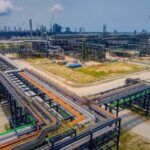


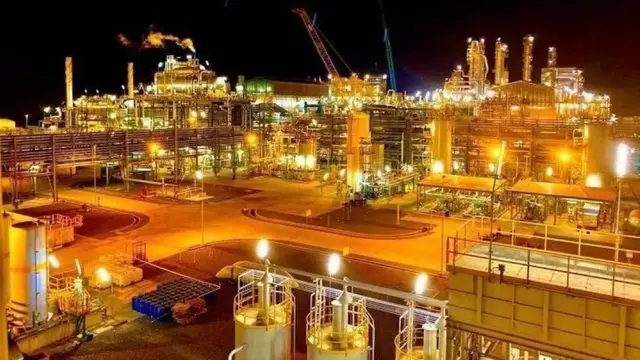
Nigeria’s industrial economy may be on the verge of a strategic turning point after Dangote Refinery’s new petrochemical partnership with Honeywell UOP, a move analysts say could reduce import dependence, support the naira, create manufacturing jobs and deepen the country’s industrial value chain.
For Nigeria, the significance goes beyond one corporate transaction. It speaks to a larger economic question: Can one of Africa’s biggest economies finally move from importing industrial inputs to producing them at scale?
That is why the Dangote Honeywell petrochemical deal deserves close attention from investors, policymakers, manufacturers and global business observers.
Why the Dangote Honeywell Deal Matters
Dangote Refinery announced it will deploy Honeywell UOP’s Oleflex technology to produce an additional 750,000 metric tonnes of propylene annually. Propylene is a vital feedstock used in plastics, packaging materials, consumer products, automotive parts and countless manufacturing applications.
The refinery also plans to produce 400,000 metric tonnes per year of Linear Alkyl Benzene (LAB), a core ingredient used in detergent production and cleaning products.
These are not niche outputs. They sit at the centre of modern industrial supply chains.
For years, Nigeria has imported large volumes of such materials despite its vast hydrocarbon resources. The result has been persistent pressure on foreign exchange reserves, higher production costs for local manufacturers and vulnerability to global supply disruptions.
The Dangote Honeywell partnership aims to change that equation.
Nigeria’s Old Economic Problem: Export Crude, Import Inputs
Nigeria has long faced a structural contradiction. The country is a major oil producer, yet many of the chemical derivatives needed by domestic manufacturers are imported from Asia, Europe, the Middle East and North America. That means Nigeria often exports raw value and imports finished or semi-finished value at higher cost.
This pattern weakens industrial competitiveness.
Manufacturers in plastics, paints, packaging, household goods and construction materials frequently depend on imported raw materials priced in dollars. When the naira weakens, production costs surge. Consumers then absorb higher prices. The Dangote petrochemical strategy seeks to reverse that cycle by producing industrial feedstocks locally.
Why Propylene Is So Important
Propylene is one of the most commercially valuable building blocks in petrochemicals.
It is used to make:
- Polypropylene plastics
- Food and beverage packaging
- Textiles and fibres
- Car components
- Consumer goods containers
- Medical equipment
- Industrial materials
A domestic supply of propylene can significantly lower costs for downstream manufacturers.
For Nigeria’s growing consumer economy, that matters enormously. As population growth, urbanisation and retail demand rise, the need for plastics, packaging and industrial materials also rises. Countries that produce these inputs locally capture more value than those that import them.
Why LAB Production Matters Too
Linear Alkyl Benzene is a crucial ingredient in detergents and cleaning agents.
This has immediate relevance for Nigeria because detergents, soaps and household cleaning products are large-volume consumer categories.
If LAB is produced locally:
- Local FMCG manufacturers may reduce import exposure
- Supply chains become faster and more stable
- Foreign exchange demand declines
- Domestic brands can scale more competitively
- Potential exports become possible
In short, petrochemicals can quietly power broad sections of the consumer economy.
Stakeholders See Strong Economic Upside
Industry stakeholders have described the partnership as a major positive for Nigeria’s industrial future. Manufacturing voices note that Nigeria spends billions importing resins and petrochemical inputs annually. Those imports place pressure on scarce foreign currency and weaken local value creation.
By substituting imports with domestic production, Nigeria could benefit through:
1. Stronger Foreign Exchange Position
Every imported industrial raw material requires hard currency. Reducing that dependence helps conserve reserves and ease pressure on the naira.
2. Lower Manufacturing Costs
Domestic supply can reduce freight costs, shipping delays, insurance charges and forex volatility.
3. More Jobs
Petrochemicals create employment directly and indirectly across logistics, engineering, packaging, manufacturing and services.
4. Export Potential
If capacity exceeds domestic demand, Nigeria can supply West Africa and broader African markets.
5. Industrial Ecosystem Growth
One petrochemical plant can stimulate hundreds of downstream businesses.
Why This Matters to the Naira
Nigeria’s currency challenges are partly linked to import dependency.
When businesses need dollars to import raw materials, demand for foreign exchange rises. If supply is limited, the naira weakens. A stronger domestic industrial base changes that pressure.
If more manufacturers source key inputs locally:
- Dollar demand can moderate
- Balance of payments pressures may ease
- Local pricing becomes more stable
- Confidence in domestic production improves
While one project cannot solve currency instability alone, it can contribute to structural relief.
A Bigger Dangote Strategy Is Emerging
This partnership also reveals that Dangote Refinery is more than a fuel project. Many initially viewed the refinery mainly as a petrol, diesel and aviation fuel facility. But globally, the most valuable refining complexes are often integrated with petrochemicals.
That is where margins, diversification and long-term industrial leverage grow.
By expanding into propylene and LAB, Dangote is moving toward the model used by leading energy-industrial groups worldwide: integrated refining plus chemicals plus downstream manufacturing inputs.
This gives resilience when fuel margins fluctuate.
What It Means for Nigerian Manufacturers
For local manufacturers, this could be one of the most important industrial developments of the decade.
Sectors that may benefit include:
- Packaging
- Paints and coatings
- Plastic converters
- FMCG producers
- Household goods makers
- Construction materials
- Textile and fibre users
- Detergent producers
Many Nigerian businesses currently struggle with imported input costs, shipping uncertainty and exchange-rate risk.
Reliable local supply could improve planning, margins and competitiveness.
Why Global Investors Should Watch This
For US, UK and international investors, the Dangote Honeywell deal signals something broader than local industrial news. It signals that Nigeria is attempting to move up the value chain.
Instead of being merely:
- A crude exporter
- A consumption market
- An import destination
Nigeria wants to become:
- A processing hub
- A manufacturing input base
- A regional supply platform
- An industrial export economy
That shift, if sustained, could create long-term investment opportunities in:
- Manufacturing
- Logistics
- Industrial parks
- Consumer goods
- Chemicals
- Packaging
- Infrastructure finance
What Government Must Do Next
Large private investments succeed best when public policy supports scale. To maximise this opportunity, Nigeria needs:
Policy Consistency
Investors need confidence that trade, tariff and industrial policies will remain predictable.
Infrastructure Reliability
Power, roads, ports and gas supply are critical.
Smart Tariff Design
Temporary protection for strategic domestic inputs may help scale local production.
Long-Term Finance
Manufacturers need affordable financing to expand downstream capacity.
Ease of Doing Business
Faster approvals and lower friction improve industrial momentum.
Without these supports, even strong private investment can underperform.
Risks to Watch
The opportunity is significant, but not automatic.
Potential risks include:
- Weak infrastructure bottlenecks
- FX instability affecting equipment imports
- Regulatory inconsistency
- Smuggling or dumping of cheaper imports
- High financing costs for downstream users
- Delays in industrial off-take capacity
The key challenge is not merely producing petrochemicals, but ensuring Nigerian industries can absorb and scale around them.
The Strategic Meaning for Africa
Africa often exports raw commodities and imports processed industrial goods. That model limits prosperity. The Dangote Honeywell deal represents a different logic: Use local resources to create local industrial inputs that power local manufacturing.
That is how stronger economies are built.
If Nigeria can execute this model effectively, it may become a template for other African markets seeking industrial transformation.
Final Verdict: More Than a Corporate Deal
The Dangote Honeywell petrochemical partnership is not just another business announcement. It is a signal that Nigeria’s largest private industrial project is evolving into a broader manufacturing platform.
If successful, it can help:
- Cut imports
- Strengthen the naira
- Create jobs
- Lower industrial costs
- Improve export capacity
- Expand manufacturing depth
For years, Nigeria’s economic debate has focused on oil revenues, exchange rates and fiscal stress.
But long-term prosperity depends on something deeper: producing what the economy consumes and exporting what the world values.
That is why this deal matters. It is not merely about petrochemicals. It is about whether Nigeria can finally industrialise at scale.