

By using this site, you agree to the Privacy Policy and Terms of Use.
Accept
BrandiQBrandiQBrandiQ
  • Brand & Marketing
  • Industry News
  • Market Intelligence
  • Business & Economy
  • Technology & Digital
Reading: Critical Minerals, Industrial Sovereignty and the $Trillion Question: Why Africa’s Value-Addition Push is Reshaping Global Supply Chains
Share
0

No products in the cart.

Notification Show More
Font ResizerAa
BrandiQBrandiQ
0
Font ResizerAa
  • Brand & Marketing
  • Industry News
  • Market Intelligence
Have an existing account? Sign In
Follow US
© 2026 Brand IQ. All Rights Reserved.
Business & Economy

Critical Minerals, Industrial Sovereignty and the $Trillion Question: Why Africa’s Value-Addition Push is Reshaping Global Supply Chains

Dr. Desmond Ekeh
Last updated: May 7, 2026 9:29 am
Dr. Desmond Ekeh
May 6, 2026
Share
7 Min Read
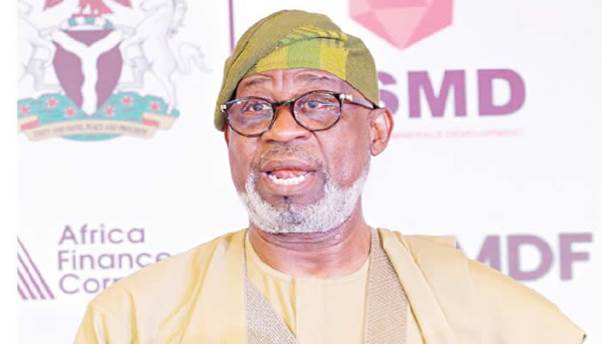
Nigeria’s Minister of Solid Minerals, Dele Alake, speaking at the Kenya Mining Investment Conference and Exhibition 2026.
Photo: Dele Alake
SHARE

At the Kenya Mining Investment Conference and Exhibition 2026, Oladele Alake, Nigeria’s Minister of Solid Minerals, delivered what may prove to be one of the most consequential economic signals emerging from the continent in recent years: Africa must move beyond extraction and into value creation.

This is not a rhetorical shift. It is a structural one.

- Advertisement -

For decades, Africa has occupied a paradoxical position in the global economy – resource-rich yet value-poor. The continent supplies a significant share of the world’s critical minerals – lithium, cobalt, manganese, and rare earth elements – yet captures only a fraction of the economic value embedded in them. The result is a persistent pattern of exporting raw materials while importing finished goods at a premium.

Alake’s intervention, made in his capacity as chairman of the Africa Minerals Strategy Group, reframes this imbalance not merely as an economic inefficiency, but as a strategic vulnerability in an era defined by energy transition, digital transformation, and geopolitical competition.

From Extraction to Industrial Strategy

- Advertisement -

The global economy is undergoing a profound reconfiguration. The transition to clean energy, the expansion of artificial intelligence, and the growth of advanced manufacturing have intensified demand for critical minerals. These resources now sit at the centre of industrial policy in major economies including the United States and the United Kingdom.

Yet, while these economies compete to secure supply chains, Africa remains largely positioned at the lowest end of the value chain.

Alake’s argument is clear: this positioning is no longer tenable.

Value addition – processing, refining, and manufacturing – must become the new organising principle of Africa’s mineral economy. Without it, the continent risks perpetuating a colonial-era economic model in a 21st-century industrial landscape.

- Advertisement -

Regional Integration as Economic Leverage

A central pillar of this strategy is coordination. Through frameworks such as the African Continental Free Trade Area, African countries are being urged to harmonise regulations, develop cross-border infrastructure, and build integrated value chains.

This is where the analysis becomes particularly relevant for global investors.

- Advertisement -

Fragmentation has historically diluted Africa’s bargaining power. Individual countries negotiating in isolation often accept unfavourable terms, particularly in capital-intensive sectors like mining. A coordinated continental approach changes that equation.

A unified Africa can:

  • Negotiate better pricing and offtake agreements
  • Attract larger, long-term industrial investments
  • Build regional processing hubs that achieve economies of scale

In effect, integration transforms Africa from a collection of resource sites into a coherent industrial platform.

Implications for US, UK and European Investors

- Advertisement -

For investors across the Europe, the United States, and the UK, this shift presents both opportunity and recalibration.

First, the opportunity.

As Africa moves into value addition, the investment landscape expands beyond extraction into:

  • Mineral processing and refining
  • Battery manufacturing and energy storage systems
  • Industrial infrastructure and logistics corridors
  • Technology transfer and R&D partnerships

These are higher-margin, longer-term investment opportunities aligned with global decarbonisation and digitalisation agendas.

Second, the recalibration.

Investors accustomed to extractive models will need to adapt to:

- Advertisement -
  • More stringent local content requirements
  • Greater regulatory coordination across jurisdictions
  • Increased emphasis on environmental, social, and governance standards

This is not a constraint; it is a maturation of the market.

Environmental Ethics and the New Resource Economy

From an environmental ethics perspective, the push for value addition introduces a critical tension.

On one hand, local processing reduces the carbon footprint associated with exporting raw materials for refinement abroad. It also creates opportunities for more accountable, transparent production systems.

On the other hand, industrialisation brings its own ecological risks—pollution, resource depletion, and land degradation.

The challenge, therefore, is not merely to industrialise, but to do so responsibly.

- Advertisement -

This requires:

  • Strong environmental governance frameworks
  • Investment in clean processing technologies
  • Alignment with global climate commitments

For Western investors, particularly those operating under ESG mandates, this creates a dual imperative: profitability must be aligned with sustainability.

The China Factor and Strategic Competition

No serious analysis of global mineral supply chains can ignore China.

China has spent decades building dominance in mineral processing and refining, particularly in battery supply chains. Africa’s shift toward value addition is, in part, a response to this concentration of power.

For the US and UK, supporting Africa’s industrialisation is not merely developmental—it is strategic. Diversifying supply chains reduces dependency risks and strengthens geopolitical resilience.

This positions Africa not just as a supplier, but as a partner in global industrial strategy.

Nigeria’s Strategic Position

Within this broader continental movement, Nigeria occupies a critical role.

With vast untapped mineral resources and a large domestic market, Nigeria has the potential to anchor regional value chains. However, realising this potential will depend on:

  • Policy consistency
  • Infrastructure investment
  • Regulatory transparency

Alake’s call signals an awareness at the highest levels of government that minerals must become a pillar of Nigeria’s post-oil economic diversification.

BrandiQ Insight: From Resource Wealth to Value Wealth

For BrandiQ’s audience – investors, policymakers, and corporate strategists – the message is unambiguous.

Africa’s mineral sector is entering a phase transition. The old model of extraction-led growth is giving way to a more complex, integrated, and opportunity-rich ecosystem. This transition will not be without friction. Governance challenges, infrastructure gaps, and policy inconsistencies remain real constraints.

But the direction of travel is clear. The countries and companies that position themselves early within Africa’s emerging value chains will capture disproportionate returns as the system matures.

Conclusion: The Strategic Repricing of Africa

What Oladele Alake has articulated is, in essence, a call for the repricing of Africa in the global economy.

From raw material supplier to industrial actor.
From peripheral participant to strategic partner.
From resource-rich to value-rich.

For global investors, the implication is simple but profound:
Africa is no longer just where resources are found.
It is increasingly where value will be created.

And those who recognise this shift early will not just participate in Africa’s growth—they will help define it.


You Might Also Like

Nestlé Drives Circular Economy Through Plastic Recycling
Union Bank Wins N20.7bn Debt Case Against Oil Marketers
Airtel Africa returns $34.7m to Shareholders
Imo Economic Summit Targets $1tn Economy, Says Governor Uzodimma
Chappal Energies Secures $430m Reserve Lending Facilities
Share This Article
Facebook Whatsapp Whatsapp LinkedIn Telegram Email Copy Link Print
What do you think?
Love0
Sad0
Happy0
Sleepy0
Angry0
Dead0
Surprise0
Wink0
ByDr. Desmond Ekeh
Follow:
Dr. Desmond Ekeh, a PR consultant, journalist, and brand communicator, researches at the intersection of philosophy, politics and communication.
Previous Article McDonald’s restaurant branding and signage representing the company’s UK and Ireland marketing leadership transition. McDonald’s Appoints Tim Kenward as UK & Ireland CMO: A Strategic Signal on Global-Local Brand Power
Next Article Construction site and urban infrastructure development at the Mbanza Congo Centrality housing project in Angola. Integrated Urban Development, Housing Economics and Africa’s Next Infrastructure Frontier: Mitrelli’s Angola Bet in Context
Leave a Comment

Leave a Reply Cancel reply

Your email address will not be published. Required fields are marked *

Traditional Egungun masquerades performing during the 2026 World Egungun Festival sponsored by Seaman’s Schnapps.
Seaman’s Schnapps Deepens Cultural Diplomacy at World Egungun Festival
Business & Economy
Speakers and attendees gathered during the Imperfectly Awesome Conversations 4.0 event in Lagos discussing leadership, resilience, and authenticity.
‘Enough’ and NESCAFE Next Level Promo: How Philosophy is Rewiring Leadership and Brand Power in an Age of Pressure
Market Intelligence
AI Advertising Shake-Up: Meta Surges, YouTube Lags as Data Power Reshapes Global Ad Economy By Desmond Ekeh The first quarter of 2026 delivers a clear verdict on the future of digital advertising: scale alone is no longer enough. In a data-driven economy increasingly shaped by artificial intelligence, performance-not presence-is now the defining currency. Fresh analysis from WARC shows a widening divergence among Big Tech platforms, with Meta Platforms outperforming expectations, Amazon holding steady, and YouTube struggling to convert attention into revenue. At stake is more than quarterly earnings. These shifts are redefining how data, AI, and platform economics interact across Nigeria, Africa, and the global marketplace. The Data Behind the Divergence Below is a simplified analytical snapshot of Q1 2026 performance relative to projections: Platform Actual Ad Revenue Forecast Variance Strategic Signal Meta $55.0bn $54.1bn +2.3pp AI translating directly into monetisation Google Search $60.4bn +13.7% growth expected +5.4pp Search remains dominant, AI enhances usage Amazon Ads $17.2bn $17.3bn est. -0.4pp Stable, full-funnel dominance YouTube $9.98bn $10.05bn -1.9pp Engagement not converting to revenue Google Display Network Decline Decline expected -1.6pp worse Structural weakness in open web Meta and the Economics of Intelligent Attention Meta’s outperformance is not accidental; it reflects a deeper structural advantage. By embedding AI into content ranking, ad targeting, and optimisation, the company has effectively closed the loop between attention and monetisation. The implication is profound: AI is no longer a support tool - it is now the core infrastructure of revenue generation. For emerging markets like Nigeria, where platforms such as Instagram and Facebook dominate digital consumption, this signals a future where: • Advertising efficiency improves dramatically • Smaller businesses gain access to precision targeting • Platform dependency deepens Amazon and the Rise of Transactional Advertising Amazon continues to redefine advertising by collapsing the distance between exposure and purchase. Its retail media model - built on first-party data and purchase intent - remains one of the most powerful propositions in modern marketing. For the global economy, this signals a shift toward closed-loop ecosystems, where: • Every ad impression is measurable • Attribution becomes near-perfect • Marketing budgets increasingly migrate to platforms closest to transaction This has direct implications for African e-commerce ecosystems such as Jumia and Konga, which must now evolve beyond marketplace models into data-driven advertising platforms. YouTube and the Monetisation Paradox Despite massive engagement, YouTube continues to underperform expectations. The challenge is structural: short-form video (driven by platforms like TikTok) captures attention at scale but monetises less efficiently. This exposes a critical tension in the digital economy: • Attention is abundant • Monetisable attention is scarce For content creators across Africa and globally, this suggests that visibility does not equal value unless supported by strong monetisation frameworks. Global Implications: A Data-Centric Advertising Order With Meta, Amazon, and Alphabet collectively controlling over 58% of global ad spend (excluding China), their performance sets the tone for the global economy. United States The US remains the epicentre of AI-driven advertising innovation. The ability of firms like Alphabet Inc. and Meta to convert AI into revenue reinforces America’s dominance in the digital economy. United Kingdom The UK advertising industry, one of the most mature globally, faces increasing pressure to adapt. Agencies must now transition from creative-first models to data-led, AI-enabled strategy firms or risk obsolescence. Africa (Nigeria in focus) Africa stands at a critical inflection point: • Digital ad spend will grow, but largely captured by global platforms • Local platforms risk marginalisation without investment in data infrastructure • Governments must confront issues of data sovereignty and digital taxation For Nigeria, this reinforces the urgency of building indigenous data ecosystems - from fintech to media - to avoid becoming merely a consumption market. Global Economy The broader implication is the emergence of a data hierarchy: • Platforms with first-party data dominate • AI capability determines growth trajectory • Traditional media continues structural decline The Strategic Inflection Point What this quarter ultimately reveals is a shift from digital advertising to intelligent advertising systems. Meta’s success shows what happens when AI enhances both engagement and monetisation simultaneously. Amazon demonstrates the power of proximity to purchase. Alphabet proves search remains resilient, even as its broader ecosystem fragments. And YouTube’s struggle offers a cautionary lesson: in the age of AI, attention alone is no longer enough. BrandiQ Insight The future of advertising will not be decided by who captures the most users, but by who understands them best. Data is no longer an asset; it is infrastructure. AI is no longer innovation; it is execution. For businesses, governments, and institutions - from Lagos to London, New York to Nairobi - the message is clear: Those who control data, design algorithms, and own the customer journey will define the next phase of the global economy.
AI Advertising Shake-Up: Meta Surges, YouTube Lags as Data Power Reshapes Global Ad Economy
Market Intelligence
How to evaluate a business
From Idea to Empire: A Simple but Powerful Framework to Evaluate Any Business
Market Intelligence
- Advertisement -

You Might Also Like

dhl

Nigeria Emerges Among Fastest-Rising Economies in Global Trade Integration – DHL Connectedness Report 2026

March 18, 2026

Access Holdings Posts N2.5tn Half-Year Gross Earnings

October 27, 2025

UBA, Three Other Banks Pay N135bn Dividends Amid Challenges

September 26, 2025

Jubaili Bros, Perkins Host Technical Seminar on Energy

November 5, 2025

Champion Breweries Holds Signing Ceremony for N15.9bn Rights Issue

November 17, 2025

Soft Drinks Tax Hike Harmful to Economy – CPPE

December 2, 2025
Arewa

Arewa Set to Reclaim Position as Creative and Entrepreneurial Hub with 2025 Festival

December 17, 2025

JMJ Cleans the Street, Marks World Environmental Day

September 24, 2025
- Advertisement -
Facebook Twitter Youtube

Subscribe to BrandiQ Newsletter

Subscribe to our newsletter to get our latest articles instantly! Don't worry, we don't spam.
Brand IQ

BrandiQ is Africa’s leading digital platform for brand strategy, business innovation, marketing insights, and data-backed intelligence shaping African markets.

  • News
  • Business Insight
  • About Us
  • Contact Us
  • Privacy Policy
  • Terms & Conditions

Copyright 2013 – 2026 BrandiQ. All Rights Reserved

Welcome Back!

Sign in to your account

Username or Email Address
Password

Lost your password?