

In African banking, a quiet strategic shift is underway. For years, lenders competed through branches, interest rates, ATM networks and polished corporate advertising. Today, some of the smartest institutions are competing through something older and deeper than finance: culture.
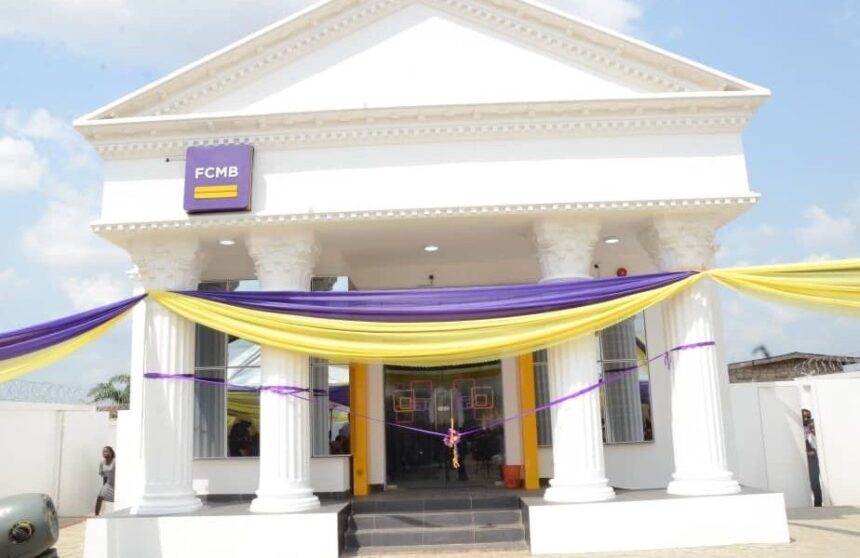
Ecobank Nigeria and First City Monument Bank have offered two recent examples of how banks are increasingly treating festivals, heritage industries and creative ecosystems not as side-stage sponsorships, but as viable growth markets. Ecobank’s upcoming Adire Lagos Experience 5.0 and FCMB’s support for the Ibadan Cultural Festival reveal a new banking playbook in which commerce, identity and community are becoming central to customer acquisition and retention.
This is more than public relations. It is a response to how African markets actually function.
Banking Moves Beyond the Branch
Traditional banking strategy assumed customers made rational choices based on convenience, pricing and trust. Those factors still matter. But they no longer explain the whole market. Consumers now choose institutions partly through identity and emotional connection. Younger demographics want brands that feel relevant. SMEs want partners that understanding informal commerce. Communities want institutions that contribute visibly to local development.
That is where culture becomes commercially useful. Culture gathers people. People create transactions. Transactions create data, loyalty and future lending opportunities. Ecobank and FCMB appear to understand that festivals, textile markets and heritage events are not merely colourful gatherings. They are temporary economic zones.
Ecobank’s Adire Lagos Experience: Heritage as Enterprise
Ecobank Nigeria has announced the fifth edition of the Adire Lagos Experience, themed Threads Across Borders. The concept is elegant and strategically coherent. Adire is one of Nigeria’s most recognisable indigenous textile traditions, rooted particularly in Yoruba craftsmanship. But Ecobank is not presenting it simply as nostalgia. Instead, the bank is positioning Adire within a broader African textile and cultural narrative.
That matters. By describing the event as a gateway for cross-border cultural exchange, Ecobank aligns heritage with trade. It also aligns perfectly with its Pan-African identity.
The event will run for four days and feature more than 100 vendors. While remaining predominantly Nigerian, around 10 per cent of participating exhibitors will come from outside Nigeria, bringing complementary African textile expressions and creative perspectives.
This balance is commercially astute. Too much localisation would limit scale. Too much continental abstraction would dilute authenticity. Ecobank has chosen both rootedness and reach.
Omoboye Odu, Head of SMEs, Partnerships and Collaborations at Ecobank Nigeria, summarised the logic clearly: “Adire is proudly Nigerian, and this platform remains firmly anchored in celebrating our local artisans and creative enterprises. At the same time, Ecobank’s Pan-African mandate allows us to thoughtfully open the space to creators from other African markets, encouraging collaboration, shared learning, and trade connections that elevate African craftsmanship as a whole.” That statement could double as a market strategy memo.
What Ecobank Is Really Building
On the surface, Adire Lagos Experience is a cultural showcase. Underneath, it functions as a multi-layer commercial engine.
It creates:
- visibility for artisans and SMEs
- merchant onboarding opportunities
- payment flows during the event
- networking for cross-border commerce
- future export relationships
- goodwill for the Ecobank brand
- emotional affiliation with creative communities
Banks often struggle to appear human. Culture solves that problem. A lender that sponsors textiles, cuisine, music and craftsmanship appears embedded in society rather than detached from it.
Ecobank’s statement that selected exhibitors may receive complimentary booths is also notable. That reduces entry barriers for smaller enterprises, many of which operate with limited marketing budgets. In practical terms, the bank is subsidising market access while strengthening future customer pipelines.
FCMB and the Ibadan Cultural Festival: Culture as Marketplace
If Ecobank frames culture as Pan-African commerce, FCMB frames it as concentrated local economics. Its support for the Ibadan Cultural Festival, also known as Okebadan, reveals a more direct transactional philosophy.
At a press conference in Ibadan, FCMB’s Divisional Head of Corporate Affairs, Diran Olojo, said: “We see culture as a functioning marketplace. Events like this concentrate demand, talent, and enterprise in one place. Our role is to help businesses plug into that, through access to finance, visibility, and the systems that support transactions and growth.”
That is one of the most commercially literate descriptions of cultural sponsorship by any Nigerian bank. It recognises that festivals are not passive spectacles. They are economic clusters where hospitality, transport, food, fashion, media and retail all experience demand spikes. In economic terms, festivals temporarily reduce customer acquisition costs because buyers and sellers gather physically in one place.
For a bank, that creates ideal conditions for:
- POS transaction growth
- merchant account openings
- SME lending leads
- wallet usage increases
- brand visibility among communities
- diaspora financial flows
Why Ibadan Matters
Ibadan is not merely a city. It is one of Nigeria’s great urban civilisations, with commercial scale, diaspora networks and cultural depth. The President-General of the Central Council of Ibadan Indigenes, Ajeniyi Ajewole, described the festival as both a cultural and economic platform. “It drives tourism, supports local businesses, and creates an opportunity for Ibadan indigenes in the diaspora to return, reconnect, and contribute to the city’s growth.”
This introduces another powerful banking angle: diaspora capital. Festivals often trigger visits, spending, remittances, family investments and property decisions. Banks that are present during such moments can capture flows that ordinary advertising misses.
The Sociology of Banking Through Culture
French sociologist Pierre Bourdieu argued that institutions gain advantage through forms of capital beyond money, including social and cultural capital.
Ecobank and FCMB are doing precisely that. They are converting cultural relevance into commercial trust. When a market woman sees a bank supporting Adire artisans, or a local trader sees a lender backing Ibadan enterprise ecosystems, the institution appears closer, less abstract and more legitimate. That emotional proximity can matter more than a slightly lower fee or marginally faster app.
Media Theory: Events as Modern Advertising
Traditional advertising interrupts attention. Cultural experiences attract it. This is why event-led branding is growing. Every visitor to Adire Lagos Experience or the Ibadan festival becomes a media node. Photos are shared. Videos circulate. Influencers post content. Vendors promote their booths. Local press covers activity. The result is earned media, social proof and word-of-mouth amplification.
Banks increasingly understand that one well-designed cultural platform can outperform dozens of static billboards.
Institutional Theory: Why Banks Need Legitimacy
Institutional theory suggests firms adapt not only for profit but to meet social expectations. In Africa, large financial institutions are increasingly expected to support jobs, SMEs, women entrepreneurs and local enterprise systems.
Purely extractive brands face suspicion. Developmental brands gain legitimacy. By investing in cultural commerce, Ecobank and FCMB signal that they are not just taking deposits. They are participating in productive ecosystems.
Why This Matters for SMEs
Small businesses often struggle with three barriers:
- visibility
- market access
- formal finance
Events like these help solve all three simultaneously. A textile producer gains customers. A food vendor gains traffic. A designer meets distributors. A merchant may open a bank account. A growing business may later seek credit. That makes culture-led banking economically rational. It is not philanthropy. It is pipeline building.
Risks and Limits
Not all culture-led branding succeeds. The dangers include:
Surface-Level Sponsorship
If a bank sponsors events but offers no useful SME products, consumers notice the gap.
Urban Elitism
If experiences cater only to affluent city audiences, grassroots enterprises may remain excluded.
Inconsistent Customer Experience
A bank cannot celebrate artisans publicly while frustrating them with poor service privately.
Short-Termism
One annual event without year-round ecosystem support limits impact.
The strongest institutions will connect events to practical banking tools: loans, savings, export support, payments and advisory services.
What Smart Banks Will Do Next
Ecobank’s and FCMB’s models hint at the future.
Next-generation culture banking could include:
- artisan export finance
- festival cashless systems
- creative industry insurance
- inventory loans for vendors
- diaspora investment products
- data-driven SME coaching
- regional trade settlement tools
This would turn culture from sponsorship into infrastructure.
BrandiQ Verdict
Ecobank and FCMB are demonstrating that Africa’s economy cannot be understood only through spreadsheets and central bank circulars. It also moves through fabrics, festivals, family networks and local pride.
Ecobank’s Adire Lagos Experience treats heritage as cross-border commerce. FCMB’s Ibadan Cultural Festival strategy treats tradition as a functioning marketplace.
Both approaches reveal a larger truth: in Africa, culture is not the opposite of business. It is one of its most enduring forms.
The banks that recognise this early may build something competitors cannot easily replicate: not just customers, but communities.