

By using this site, you agree to the Privacy Policy and Terms of Use.
Accept
BrandiQBrandiQBrandiQ
  • Brand & Marketing
  • Industry News
  • Market Intelligence
  • Business & Economy
  • Technology & Digital
Reading: Nigeria’s $300bn Dead Land Asset and 5.5 Million Housing Gap
Share
0

No products in the cart.

Notification Show More
Font ResizerAa
BrandiQBrandiQ
0
Font ResizerAa
  • Brand & Marketing
  • Industry News
  • Market Intelligence
Have an existing account? Sign In
Follow US
© 2026 Brand IQ. All Rights Reserved.
Business & Economy

Nigeria’s $300bn Dead Land Asset and 5.5 Million Housing Gap

Dr. Desmond Ekeh
Last updated: May 7, 2026 9:38 am
Dr. Desmond Ekeh
May 5, 2026
Share
8 Min Read
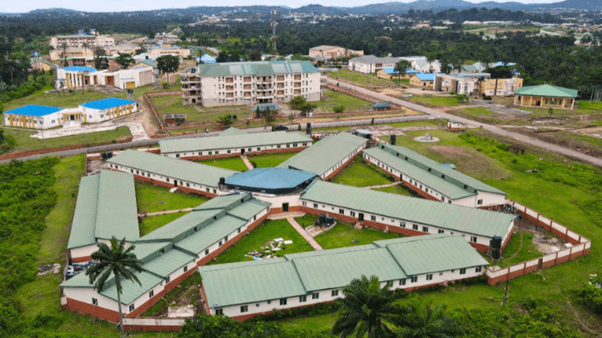
Nigeria dead land assets and housing gap chart showing $300 billion idle real estate opportunity for global investors
SHARE

…Why US, UK, and Global Investors Should Pay Attention to Africa’s Largest Real Estate Market

In global capital markets, the most lucrative opportunities rarely announce themselves as such. They are often buried in inefficiencies – structural gaps where value exists but is neither priced correctly nor fully visible to institutional capital. Nigeria’s land and housing market is one such anomaly.

- Advertisement -

Two recent industry insights – one from the Geospatial Builders Conference and another from urban planning stakeholders – converge on a striking economic paradox: Nigeria is simultaneously sitting on over $300 billion in idle land assets while facing an annual housing deficit of 550,000 units over the next decade. For investors across the United States, United Kingdom, Europe, and South Africa, this is not merely a domestic inefficiency. It is a global capital mispricing event.

The Core Problem: When Assets Exist but Cannot Be Seen

At the heart of Nigeria’s real estate dilemma lies a deceptively simple issue: land exists, but it is not legible to capital.

- Advertisement -

Approximately 95 percent of land in Nigeria operates outside formal systems of documentation, verification, and valuation. In practical terms, this means:

  • Land cannot be easily used as collateral
  • Ownership is difficult to verify at scale
  • Institutional investors cannot price risk accurately

From a World Bank or IMF analytical lens, this is a classic case of “dead capital” – a concept popularised by Hernando de Soto – where assets exist physically but lack the legal and informational infrastructure required to participate in modern financial systems.

The implication is profound: banks do not lend on land; they lend on certainty.

Without geospatial data, digital registries, and enforceable property rights, Nigeria’s vast land assets remain economically inert. They cannot unlock credit, attract structured finance, or support large-scale development.

- Advertisement -

The Demand Shock: A Structural Housing Deficit

While supply remains locked, demand is accelerating at an unprecedented pace.

Nigeria requires at least 550,000 new homes annually for the next decade. This translates into a cumulative deficit of over 5.5 million housing units, driven by:

- Advertisement -
  • Rapid population growth
  • Urbanisation pressures
  • Infrastructure expansion corridors

This is not cyclical demand. It is structural and demographic, making it far more predictable – and therefore investable – than many emerging market opportunities.

Yet, paradoxically, this demand is not being met efficiently due to:

  • High interest rates (20-30% mortgage rates)
  • Inflationary pressures on building materials
  • Weak mortgage penetration
  • Cash-based property transactions

In effect, Nigeria has demand without financing and assets without liquidity.

The Investment Thesis: Converting Friction into Yield

- Advertisement -

For global investors, this dual inefficiency creates a rare alignment of opportunity across multiple asset classes.

1. Land Formalisation as Financial Infrastructure

The first layer of opportunity lies not in building houses, but in making land investable.

Geospatial data, digital land registries, and property identity systems represent a foundational layer – akin to what credit bureaus did for banking or what exchanges did for capital markets.

Investors can participate through:

  • Geospatial technology platforms
  • Land titling and registry digitisation
  • Data infrastructure partnerships with government

This is where the real unlock happens. Once land becomes visible, it becomes bankable.

- Advertisement -

2. Housing Development at Scale

The second layer is direct exposure to housing supply.

A deficit of 550,000 homes annually signals:

  • Persistent demand
  • Low vacancy risk
  • Long-term price appreciation

Key entry strategies include:

  • Affordable housing development funds
  • Public-private partnerships (PPP)
  • Build-to-rent models targeting urban migration

Emerging corridors such as Ibeju-Lekki illustrate how infrastructure-led growth can generate exponential returns. Early investors in such zones have already seen land values multiply significantly.

3. Real Estate-Linked Financial Products

- Advertisement -

Given the limitations of Nigeria’s mortgage system, innovation in financial structuring becomes critical.

Opportunities include:

  • Housing-backed securities
  • Rent-to-own financing models
  • Diaspora investment vehicles
  • Private credit funds targeting developers

For UK, US and other global investors, this represents an opportunity to deploy capital into high-yield, underpenetrated credit markets with strong asset backing.

Global Implications: Why This Matters Beyond Nigeria

This is not just a Nigerian story. It reflects a broader shift in the global economy.

For the United States

US institutional investors are increasingly seeking diversification beyond saturated real estate markets. Nigeria offers:

  • Higher yield potential
  • Demographic-driven demand
  • Early-stage market entry advantages

For the United Kingdom

With deep historical, financial, and diaspora ties to Nigeria, UK capital is uniquely positioned to:

  • Structure investment vehicles
  • Lead advisory and legal frameworks
  • Bridge institutional trust gaps

For Europe and South Africa

As supply chains and capital flows reconfigure globally, African urbanisation becomes a central growth theme. Nigeria, as the continent’s largest economy, serves as a gateway market.

The Risk Question: What Investors Must Watch

No serious analysis is complete without acknowledging risk.

Nigeria’s real estate opportunity is constrained by:

  • Regulatory inconsistencies
  • Land ownership disputes
  • Macroeconomic volatility
  • Infrastructure gaps

However, these risks are precisely what create the pricing inefficiencies. The key is not to avoid them, but to structure around them through partnerships, due diligence, and phased capital deployment.

The Strategic Insight: From Speculation to Systemisation

Currently, much of Nigeria’s land market is driven by speculative land banking – buying land in anticipation of future infrastructure.

While profitable, this model:

  • Locks land out of productive use
  • Inflates prices
  • Limits inclusive development

The next phase of the market will shift toward systematisation:

  • Data-driven valuation
  • Institutional financing
  • Scalable development

This is where long-term investors outperform short-term speculators.

BrandiQ Intelligence: The Real Opportunity

For BrandiQ’s global audience – investors, policymakers, and corporate strategists – the message is clear: Nigeria’s real estate market is not underdeveloped; it is under-structured. The $300 billion in idle land assets is not a static figure. It is a latent balance sheet waiting to be activated.

The 550,000 annual housing demand is not a crisis. It is a guaranteed pipeline of future cash flows. The convergence of these two forces creates one of the most compelling investment narratives in emerging markets today.

Conclusion: Pricing the Invisible

In financial markets, value accrues to those who can see what others cannot.

Nigeria’s land assets are invisible not because they do not exist, but because they are not yet translated into the language of global capital: data, certainty, and structure. For investors willing to engage with this complexity, the reward is not incremental – it is transformational.

The question is no longer whether the opportunity exists. The question is: who will build the systems that make it visible – and capture the value before the rest of the world catches up.


You Might Also Like

NAICOM, FRSC, NHIA align to enforce motor insurance, others
Coal Re-emerges as Strategic Lifeline for African SMEs Amid Escalating Fuel Prices
YouTube reaches agreement with Fox to prevent disruption
Seplat Rehabilitates Oil Wells, Boosts Output by 33,000bpd
Copia Group Joins Angola Oil & Gas 2026 as Platinum Sponsor
Share This Article
Facebook Whatsapp Whatsapp LinkedIn Telegram Email Copy Link Print
What do you think?
Love0
Sad0
Happy0
Sleepy0
Angry0
Dead0
Surprise0
Wink0
ByDr. Desmond Ekeh
Follow:
Dr. Desmond Ekeh, a PR consultant, journalist, and brand communicator, researches at the intersection of philosophy, politics and communication.
Previous Article Neverland agency wins Instagram creative account pitch signalling shift in UK advertising industry toward independent agencies UK Advertising Industry Shift: Neverland Wins Instagram Creative Account in Competitive Pitch
Next Article African tech innovators working on AI-powered digital energy solutions in Nigeria. UK-EU €827,000 Digital Energy Challenge Targets Nigeria’s Innovators: A Strategic Opening for AI-Driven Infrastructure Investment
Leave a Comment

Leave a Reply Cancel reply

Your email address will not be published. Required fields are marked *

Traditional Egungun masquerades performing during the 2026 World Egungun Festival sponsored by Seaman’s Schnapps.
Seaman’s Schnapps Deepens Cultural Diplomacy at World Egungun Festival
Business & Economy
Speakers and attendees gathered during the Imperfectly Awesome Conversations 4.0 event in Lagos discussing leadership, resilience, and authenticity.
‘Enough’ and NESCAFE Next Level Promo: How Philosophy is Rewiring Leadership and Brand Power in an Age of Pressure
Market Intelligence
AI Advertising Shake-Up: Meta Surges, YouTube Lags as Data Power Reshapes Global Ad Economy By Desmond Ekeh The first quarter of 2026 delivers a clear verdict on the future of digital advertising: scale alone is no longer enough. In a data-driven economy increasingly shaped by artificial intelligence, performance-not presence-is now the defining currency. Fresh analysis from WARC shows a widening divergence among Big Tech platforms, with Meta Platforms outperforming expectations, Amazon holding steady, and YouTube struggling to convert attention into revenue. At stake is more than quarterly earnings. These shifts are redefining how data, AI, and platform economics interact across Nigeria, Africa, and the global marketplace. The Data Behind the Divergence Below is a simplified analytical snapshot of Q1 2026 performance relative to projections: Platform Actual Ad Revenue Forecast Variance Strategic Signal Meta $55.0bn $54.1bn +2.3pp AI translating directly into monetisation Google Search $60.4bn +13.7% growth expected +5.4pp Search remains dominant, AI enhances usage Amazon Ads $17.2bn $17.3bn est. -0.4pp Stable, full-funnel dominance YouTube $9.98bn $10.05bn -1.9pp Engagement not converting to revenue Google Display Network Decline Decline expected -1.6pp worse Structural weakness in open web Meta and the Economics of Intelligent Attention Meta’s outperformance is not accidental; it reflects a deeper structural advantage. By embedding AI into content ranking, ad targeting, and optimisation, the company has effectively closed the loop between attention and monetisation. The implication is profound: AI is no longer a support tool - it is now the core infrastructure of revenue generation. For emerging markets like Nigeria, where platforms such as Instagram and Facebook dominate digital consumption, this signals a future where: • Advertising efficiency improves dramatically • Smaller businesses gain access to precision targeting • Platform dependency deepens Amazon and the Rise of Transactional Advertising Amazon continues to redefine advertising by collapsing the distance between exposure and purchase. Its retail media model - built on first-party data and purchase intent - remains one of the most powerful propositions in modern marketing. For the global economy, this signals a shift toward closed-loop ecosystems, where: • Every ad impression is measurable • Attribution becomes near-perfect • Marketing budgets increasingly migrate to platforms closest to transaction This has direct implications for African e-commerce ecosystems such as Jumia and Konga, which must now evolve beyond marketplace models into data-driven advertising platforms. YouTube and the Monetisation Paradox Despite massive engagement, YouTube continues to underperform expectations. The challenge is structural: short-form video (driven by platforms like TikTok) captures attention at scale but monetises less efficiently. This exposes a critical tension in the digital economy: • Attention is abundant • Monetisable attention is scarce For content creators across Africa and globally, this suggests that visibility does not equal value unless supported by strong monetisation frameworks. Global Implications: A Data-Centric Advertising Order With Meta, Amazon, and Alphabet collectively controlling over 58% of global ad spend (excluding China), their performance sets the tone for the global economy. United States The US remains the epicentre of AI-driven advertising innovation. The ability of firms like Alphabet Inc. and Meta to convert AI into revenue reinforces America’s dominance in the digital economy. United Kingdom The UK advertising industry, one of the most mature globally, faces increasing pressure to adapt. Agencies must now transition from creative-first models to data-led, AI-enabled strategy firms or risk obsolescence. Africa (Nigeria in focus) Africa stands at a critical inflection point: • Digital ad spend will grow, but largely captured by global platforms • Local platforms risk marginalisation without investment in data infrastructure • Governments must confront issues of data sovereignty and digital taxation For Nigeria, this reinforces the urgency of building indigenous data ecosystems - from fintech to media - to avoid becoming merely a consumption market. Global Economy The broader implication is the emergence of a data hierarchy: • Platforms with first-party data dominate • AI capability determines growth trajectory • Traditional media continues structural decline The Strategic Inflection Point What this quarter ultimately reveals is a shift from digital advertising to intelligent advertising systems. Meta’s success shows what happens when AI enhances both engagement and monetisation simultaneously. Amazon demonstrates the power of proximity to purchase. Alphabet proves search remains resilient, even as its broader ecosystem fragments. And YouTube’s struggle offers a cautionary lesson: in the age of AI, attention alone is no longer enough. BrandiQ Insight The future of advertising will not be decided by who captures the most users, but by who understands them best. Data is no longer an asset; it is infrastructure. AI is no longer innovation; it is execution. For businesses, governments, and institutions - from Lagos to London, New York to Nairobi - the message is clear: Those who control data, design algorithms, and own the customer journey will define the next phase of the global economy.
AI Advertising Shake-Up: Meta Surges, YouTube Lags as Data Power Reshapes Global Ad Economy
Market Intelligence
How to evaluate a business
From Idea to Empire: A Simple but Powerful Framework to Evaluate Any Business
Market Intelligence
- Advertisement -

You Might Also Like

Lafarge, TBS Unveil Independence Obelisk

November 24, 2025
ncdmb

Nigeria’s Nigerian Content Development and Monitoring Board (NCDMB) Secures Key Local Content Role at African Energy Week (AEW) 2026

March 31, 2026
mtn nigeria

MTN Fintech Advocates Harmonised Rules

September 24, 2025
African energy chamber

African Energy Chamber: Africa Must ‘Refine, Baby Refine’ as Global Supply Disruptions Expose Need for Downstream Expansion

April 14, 2026
africa

Africa’s Energy Diplomacy Intensifies as Nations Court Investors in Paris

March 27, 2026
nollywood

Paris-Nollywood Alliance Signals New Era for African Cinema in Global Film Economy

March 23, 2026

GCIP Nigeria Honours Cleantech Innovators

November 12, 2025
NISO

NISO’s Grid Losses and the Hidden Cost of Nigeria’s Electricity Inefficiency

April 10, 2026
- Advertisement -
Facebook Twitter Youtube

Subscribe to BrandiQ Newsletter

Subscribe to our newsletter to get our latest articles instantly! Don't worry, we don't spam.
Brand IQ

BrandiQ is Africa’s leading digital platform for brand strategy, business innovation, marketing insights, and data-backed intelligence shaping African markets.

  • News
  • Business Insight
  • About Us
  • Contact Us
  • Privacy Policy
  • Terms & Conditions

Copyright 2013 – 2026 BrandiQ. All Rights Reserved

Welcome Back!

Sign in to your account

Username or Email Address
Password

Lost your password?